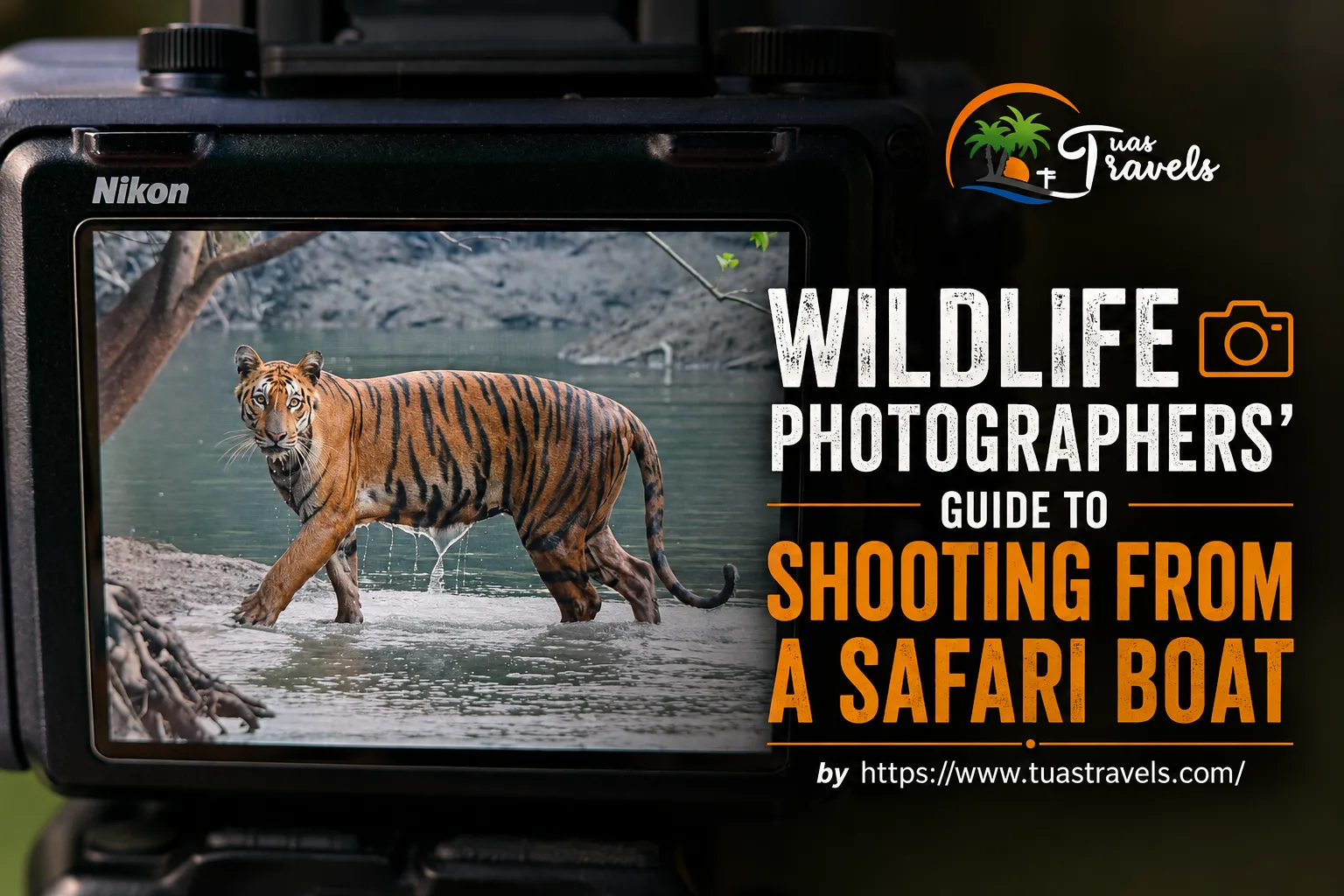
A safari boat is a great way to photograph wildlife from a unique perspective, while also exploring rivers, wetlands and mangrove forests. There are a number of disadvantages to shooting from a moving boat, though, including shifting ground, shifting light, reflections, and animal movement. You can take great and interesting wildlife photos with the proper techniques and preparation.
Make Sure to Select the Proper Camera and Lens
The wildlife photography from a moving boat, a camera that can focus quickly, shoot at high ISOs, and record at a high frame rate would be best. A telephoto lense like 100-400mm, 200-500mm or 150-600mm will allow you to move around from animal to animal as well as in closer and further ranges.
You can use longer focal lengths for closer-up shots of small subjects like birds that do not require filling large frames and would be more apt to be disturbed by the closer approach. A zoom lens is very convenient since wildlife distances can vary rapidly.
Use a Fast Shutter Speed
The camera shake is more apparent when moving on the boat. You should speed up the shutter for boat and animal movement. The faster shutter speeds (1/1000 second or higher) may be desirable for capturing moving wildlife. Under the right conditions, 1/500 second might be enough for relatively stationary subjects.
Rigidly Hold the Camera to Prevent It from Shaking
Do not use a long lens on a hard boat surface as vibration from the engine will pass through the boat and cause disturbances in the image. An alternative way to get stability is with a beanbag or a good camera stand.
When the boat is moving, maintain relaxed body position and use your arms to absorb any minor movements. Camera shake can also be minimized with image stabilization.
Set Up For Optimal Shots
Where you are on the boat can make a huge difference to your photos. Pick the best site possible with a clear view and without obstructions. Be aware of where wildlife may be seen, and their direction of travel.
Taking photos of birds or animals close to water can benefit from being taken from a lower angle to help create a more natural shot and to keep the subject from blending in with the backdrop.
Watch the Light
The soft and more beautiful light of early morning or late afternoon can be appealing. In severe midday conditions, powerful reflections and dark shadows can pose challenges for photography.
Be mindful of the direction of sunlight. Try to stand so the light falls on the animal and not make a total black silhouette.
Be Prepared To Take Sudden Action
Unexpected encounters with wildlife may occur. Always have the camera on and use a suitable autofocus mode, and use an appropriate shutter-speed for ‘action'. A continuous burst may help to capture fleeting moments like a bird flying off, an animal entering the water, or a wild animal's sudden interaction with another.
Do not press the shutter button too long however. Observe and record significant events on the camera.
Minimize Reflections And Distractions
Water surfaces reflect, glint and cause unwanted visual elements that can be distracting. Adjustments in your shooting angle can help to eliminate reflections. Try to avoid having backgrounds that are cluttered or cutting through key parts of the animal with branches, equipment on the boat, etc.
Respect Wildlife and follow Safari Rules
A good stewardship of wildlife is key to Sundarban Wildlife Photography Tour. Do not try to chase, corner or provoke an animal for a photo; do not unnecessarily approach an animal for a photo. Stay away and be aware of local wildlife laws.
The main rule of a great photo is that the animal is not harmed in any way.
Conclusion
The preparation, quick responses and a keen eye are necessary for taking pictures of wildlife on a Safari boat. Use the correct lens, shoot fast and shake-less, understand light, and respect wildlife to capture the most out of every encounter. It is with patience and responsible methods that you can produce great photos of wildlife, no matter the subject, whether it is birds or crocodiles, deer or Royal Bengal Tigers.