Most people don’t think about CPR training until something forces the issue a job requirement, a certification deadline, or a moment that lingers longer than expected. Then the question sharpens: not should I learn this, but where do I learn it properly? The difference matters. CPR isn’t theoretical. It’s a sequence of actions that either holds under pressure or doesn’t.
If you’re trying to sort through options, it helps to understand how classes are actually structured, what’s taught, and what you leave with. That’s the practical reality of CPR classes at CPR Partner Training Center in Minneapolis.
Understanding the Types of CPR Classes Available
CPR Partner, LLC doesn’t run a single, generic course. The offerings are divided by need, which makes the decision more straightforward.
You’ll typically see:
· Heart saver CPR/AED for non-medical participants
· First Aid combined with CPR/AED for workplace compliance
· Basic Life Support (BLS) for healthcare providers
Each course follows the same underlying principle: teach the skill in a way that holds up outside the classroom. Not just enough to pass, but enough to use.
Who These Classes are Designed For
A glance around the room tells you how widely applicable this training is. There are:
· Nurses and clinical staff renewing credentials
· Teachers and childcare providers meeting safety requirements
· Fitness trainers responsible for active environments
· Individuals who simply don’t want to be unprepared
CPR Partner, LLC, manages that mix without slowing the class down. The pace stays steady, but no one gets left behind.
What You Actually Learn
The content is direct. No excess, no detours. You’ll work through:
· Recognizing cardiac arrest and urgent medical situations
· Performing consistent, high-quality chest compressions
· Delivering rescue breaths correctly
· Using an automated external defibrillator (AED)
· Responding to choking across age groups
There’s repetition built into each section, not enough to feel tedious, just enough to make the actions stick.
Hands-On Training: Where It Starts to Settle In
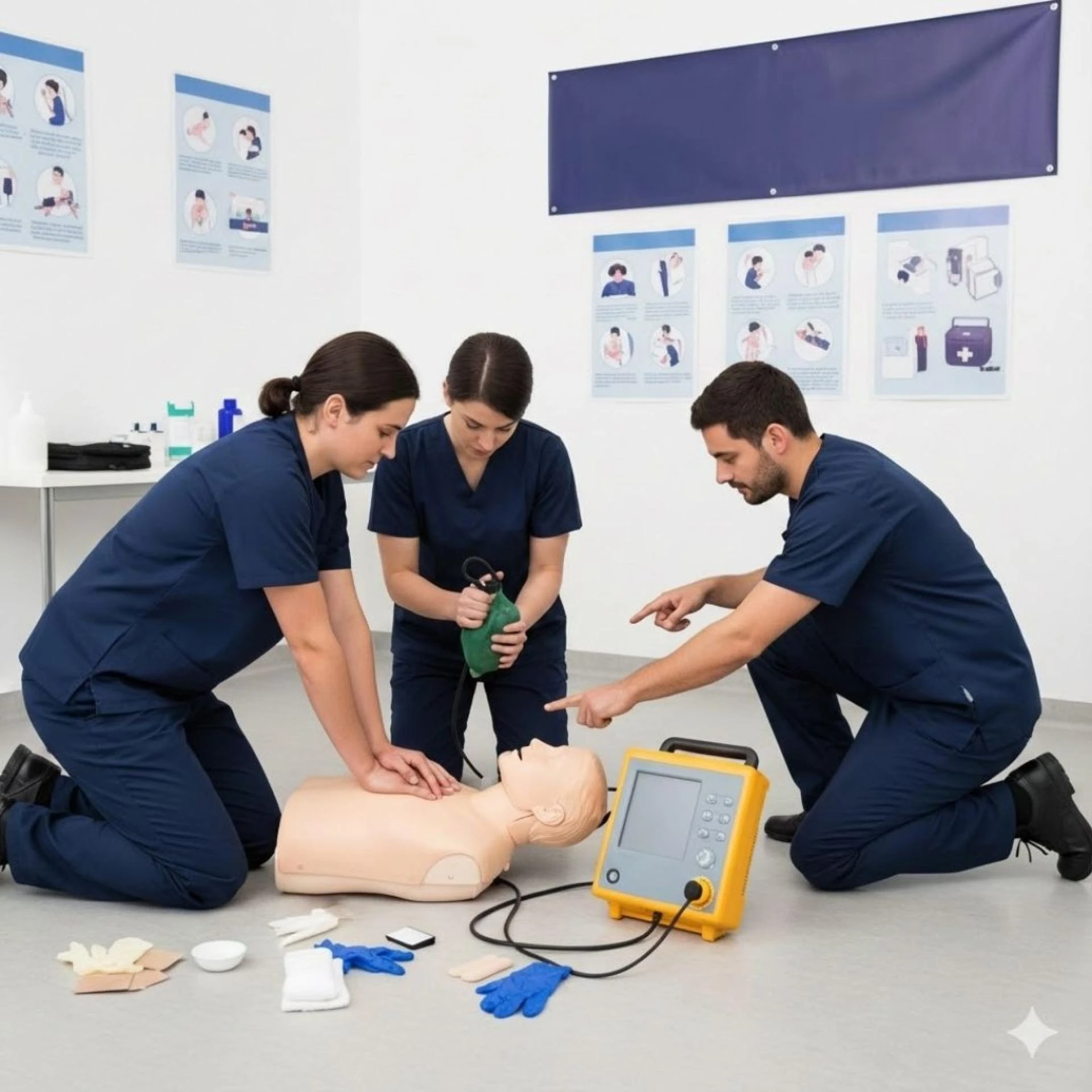
Reading about CPR is one thing. Doing it is another. You’ll spend time on the floor with a manikin, working through compressions until the rhythm feels steady. It’s more demanding than expected. Arms fatigue. Timing slips. Then it improves.
Instructors at CPR Partner, LLC stay engaged throughout. They make adjustments to posture, readjust the location of the hands, and fine-tune the pace. Even though they are minor, the cumulative effect is significant. After a few rounds, the movement begins to feel consistent, less forced, more automatic.
That’s where the CPR Partner Training Center in Minneapolis distinguishes itself. The emphasis stays on repetition you can rely on, not just instructions you’ve heard once.
AED Training and Real-World Use
AEDs are straightforward devices, but unfamiliarity creates hesitation. Training removes that gap. You’ll practice:
· Activating the device quickly
· Placing pads with accuracy
· Following its prompts without delay
It doesn’t take long before the process feels manageable. That shift from uncertainty to familiarity is the entire point.
Course Formats and Scheduling Flexibility
Not everyone can commit to the same format, and the training reflects that. Options typically include:
· In-person classes with full instructor interaction
· Blended learning, where coursework is completed online, followed by an in-person skills session
Both lead to the same certification. The difference is how you get there. Some prefer the structure of a classroom; others need flexibility. Either way, the hands-on component remains non-negotiable.
Certification Process and Timeline
The certification process is refreshingly uncomplicated. Once you demonstrate competency, you’re certified. CPR Partner, LLC issues an American Heart Association certification that’s widely recognized and valid for two years. In most cases, participants receive their eCard the same day. There’s no delay, no follow-up requirement. You leave with everything in place.
Class Environment and Instruction Style
A good training environment has a certain clarity to it. This one does. Class sizes are kept manageable, which means instructors can correct mistakes as they happen. You’re not observing from a distance; you’re involved, adjusted, and guided through the process.
The instruction itself is direct. No over-explaining, no unnecessary terminology. Just clear direction and consistent practice.
Why Training Here Feels Different
Not every CPR class is built the same. Some rush through material. Others lean too heavily on explanation without enough application.
CPR Partner, LLC keeps it balanced:
· Hands-on from the start
· Immediate, practical feedback
· Structured without feeling rigid
· Focused on real-world use
It’s designed to leave something behind, not just a certificate, but a skill that holds.
Conclusion
CPR training has a way of staying with you. The rhythm of compressions, the sequence of actions, the quiet confidence that you can step in instead of stepping back, it doesn’t fade quickly. CPR Partner, LLC, approaches the process with that in mind, keeping the training grounded and repeatable from beginning to end. Whether you’re starting for the first time or returning for BLS Recertification in Minneapolis, the value isn’t in completing the class. It’s in knowing, without hesitation, that you can respond when it counts.