
How many times have you swept up wasted chicken feed, wondering if there's a smarter way to keep your birds fed without feeding half the neighborhood wildlife too? You're not alone in this frustration. Recent USDA data reveals that feed represents 65-75% of poultry production costs, making efficient feeding systems crucial for both commercial and backyard operations.
This is where innovative chicken gravity feeder systems are changing the game for poultry enthusiasts across America.
The good news? Made in the USA products like Riverbend Resources' innovative feeding systems are revolutionizing how we think about poultry care. But before you make any investment decisions, let's dive deep into whether these systems truly deliver on their promises.
What Makes Gravity Feeders Different From Traditional Systems?
Ever wondered what happens inside those mysterious containers that seem to keep chickens happily fed for days? The magic lies in simple physics combined with smart engineering. Unlike traditional methods where you scatter grain or fill basic containers, a chicken gravity feeder uses gravity to maintain consistent feed levels automatically.
Think of it as a buffet that never runs out – except your chickens can't overindulge like we do at Sunday brunch. According to Wikipedia's documentation on modern poultry feeding evolution, we've moved from scattered grain and household scraps to sophisticated feeding systems that prioritize efficiency and bird health. These gravity-fed mechanisms work on similar principles to large poultry water systems, providing consistent, controlled access that reduces waste and stress.
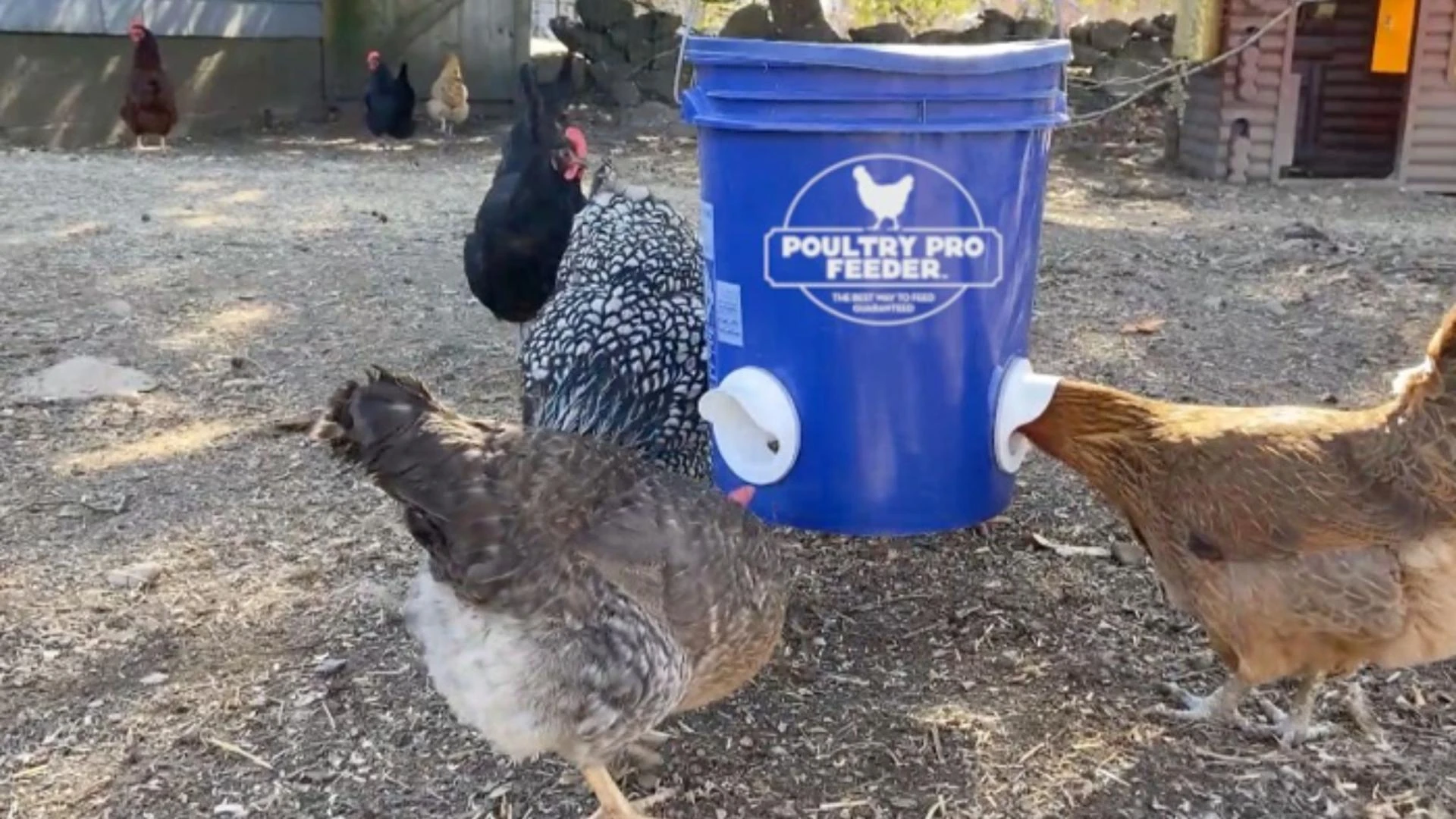
Riverbend Resources' Made in the USA design transforms any plastic container into an efficient feeding station. The beauty lies in its simplicity: as chickens eat, gravity pulls more feed down to fill the feeding tray automatically. No more daily refilling marathons or worrying about empty feeders during weekend getaways.
The Real Cost of Feed Waste (And How Gravity Feeders Fix It)
Did you know that scattered feed doesn't just disappear – it attracts rodents, spoils in weather, and represents money literally thrown to the ground? Research indicates that proper feeder management can reduce waste by up to 30%, while feed conversion ratios have improved from 2.05 in 1980 to 1.83 in 2017, with proper feeding equipment playing a crucial role.
Here's where the math gets interesting. Traditional feeders allow chickens to scratch and scatter feed – it's their natural behavior, but it's costly. A chicken gravity feeder keeps feed contained and protected, dramatically reducing this natural wastage. When you pair this with efficient large poultry water systems, you're addressing two major cost factors simultaneously.
Environmental Impact and Sustainability Considerations
When you think about it, every scattered kernel represents not just wasted money, but wasted resources that went into growing that grain. A chicken gravity feeder system reduces this waste, which decreases environmental pressure from feed production. Modern poultry feed composition, as documented in agricultural research, requires significant resources to produce – making efficiency both economically and environmentally responsible.
Pairing efficient feeding with large poultry water systems creates a comprehensive approach to resource conservation. Choosing Made in the USA products like Riverbend Resources also supports domestic manufacturing and reduces transportation emissions, adding another layer to your environmental impact reduction.
Making the Investment Decision: What the Numbers Really Say
So, is a chicken gravity feeder really worth the investment, or is it just another fancy gadget? Let's break down the math in terms even your accountant would appreciate. Cost-benefit analysis shows that automatic feeding systems reduce labor costs while improving efficiency by up to 40%.
Arkansas Agricultural Experiment Station studies found 67% water savings when efficient feeding systems work alongside large poultry water systems. For a typical backyard flock of 15 chickens, the average savings from reduced waste, improved feed conversion, and time saved can range from $180-300 annually.
The investment equation becomes even more compelling when you factor in convenience. No more daily feeding schedules or worried vacation departures. The Riverbend Resources feeder, with its Made in the USA quality and satisfaction guarantee, typically pays for itself within 2-4 months for most flock sizes.
The Bottom Line: Your Flock Deserves an Upgrade
The real question isn't whether you can afford a chicken gravity feeder – it's whether you can afford to keep wasting feed and time with outdated systems. Modern chicken keeping has evolved, and so should our feeding methods.
Your chickens are already living their best life in your carefully maintained coop. Isn't it time their feeding system matched that standard? After all, they're not exactly known for being picky eaters, but even chickens deserve an upgrade from the stone age of scattered grain.