
1. Introduction: The Changing Landscape of the US Trucking Industry
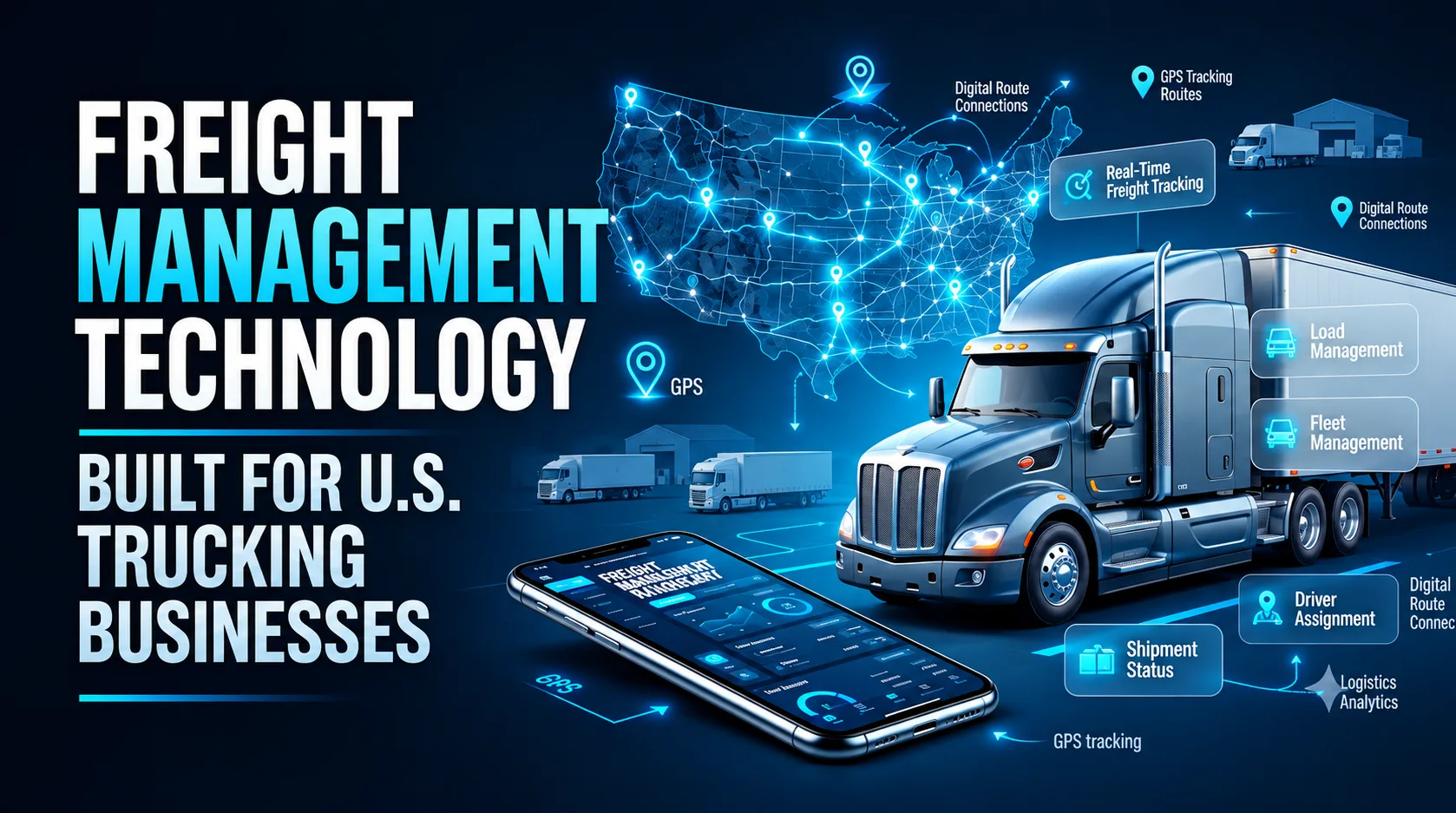
Truckers play an important role in the US economy because they deliver products from producers, warehouses, distribution centers, retailers, and finally to end users. In the course of the evolution of logistics networks, it becomes important for freight carriers to coordinate their work, keep track of drivers and trucks, and ensure timely delivery of their cargo in huge geographic zones. To simplify transportation logistics, improve shipment monitoring, and enhance fleet coordination, companies are increasingly interested in the development of trucking & freight management applications.
No matter whether it is a small private trucker or a big company owning a huge fleet, modern technologies provide new opportunities for improving the process of planning, executing and monitoring the process of freight transportation.
2. Understanding Freight Management Technology
Freight management technology refers to the digital tools and software systems used to plan, coordinate, execute, and monitor the transportation of goods. These solutions help trucking companies manage the movement of freight from pickup to final delivery while maintaining communication between the different parties involved.
A digital freight management system typically connects:
- Shippers: Businesses that need products or materials transported.
- Carriers: Trucking companies responsible for moving freight.
- Drivers: Professionals who collect and deliver shipments.
- Dispatchers: Teams that assign loads, coordinate drivers, and monitor transportation activities.
- Logistics managers: Professionals who oversee schedules, costs, capacity, and operational performance.
- Customers and receivers: Parties who need shipment status updates and delivery confirmation.
For example, a manufacturer in Ohio may need to transport products to a distribution center in Texas. A freight management platform can record the shipment requirements, assign an available carrier, provide pickup and delivery details to the driver, monitor the vehicle's progress, and store proof of delivery after the shipment arrives.
This creates a connected workflow in which relevant information can be accessed by authorized stakeholders without relying entirely on phone calls, emails, or disconnected spreadsheets.
3. Common Operational Challenges for Trucking Businesses
Despite the importance of freight transportation, many trucking businesses continue to face operational challenges that affect productivity, delivery reliability, and cost management.
Inefficient Shipment Planning
Coordinating multiple loads, pickup locations, delivery destinations, vehicle capacities, and delivery windows can be difficult. Without centralized planning tools, dispatchers may spend considerable time comparing shipment details and assigning available trucks.
Limited Shipment Visibility
Shippers and logistics teams need to know where freight is and whether it is progressing according to schedule. When tracking information is incomplete or updated manually, it becomes harder to identify delays and provide accurate delivery estimates.
Driver and Fleet Coordination
Trucking companies must coordinate drivers, vehicles, maintenance schedules, operating hours, and load assignments. Poor coordination can result in underutilized vehicles, scheduling conflicts, and unnecessary operational delays.
Unexpected Delivery Delays
Traffic congestion, severe weather, road closures, equipment issues, and loading or unloading delays can disrupt transportation schedules. Without timely alerts and updated delivery estimates, businesses may struggle to respond effectively.
Manual Paperwork and Documentation
Freight transportation involves documents such as bills of lading, rate confirmations, delivery receipts, invoices, and other shipment records. Managing these documents manually can increase administrative workloads and create opportunities for errors.
Fuel and Transportation Expenses
Fuel, tolls, maintenance, insurance, and other operating expenses influence trucking profitability. Companies need reliable information about routes, vehicle performance, and operating costs to make informed decisions.
Communication Gaps Between Stakeholders
Drivers, dispatchers, shippers, brokers, and receivers often need to exchange updates throughout a shipment's journey. Disconnected communication channels can cause missed instructions, duplicated work, and confusion about delivery status.
These challenges highlight why trucking businesses increasingly need integrated systems that support both transportation planning and real-time operational management.
4. How Digital Solutions Improve Freight Operations
Digital freight management solutions help trucking companies organize transportation activities through centralized information and automated workflows.
Instead of managing every shipment through separate communication channels, businesses can use a shared platform to coordinate load assignments, driver availability, delivery schedules, and shipment documentation.
Some practical improvements include:
Centralized load management: Dispatchers can view available shipments, compare load requirements, and assign freight based on vehicle capacity, driver availability, and delivery schedules.
Automated dispatch workflows: Digital systems can notify drivers about new assignments and provide relevant pickup, delivery, and shipment instructions.
Real-time shipment monitoring: GPS-based tracking allows authorized teams to monitor vehicle locations and identify potential delivery delays.
Digital documentation: Drivers can submit delivery receipts, photographs, signatures, and other shipment records through mobile applications.
Improved scheduling: Logistics teams can organize pickup and delivery appointments, monitor planned schedules, and respond to operational changes.
Centralized communication: In-app notifications and messaging help drivers, dispatchers, and logistics teams exchange relevant information.
Modern trucking businesses are increasingly exploring digital solutions to simplify transportation workflows and improve freight visibility. If you are interested in understanding how these solutions are developed, click the link below and watch the video to learn more about trucking & freight management app development.
5. Key Technologies Powering Modern Freight Management
Freight management platforms combine several technologies to support transportation planning, vehicle monitoring, and logistics coordination. Understanding their practical applications helps trucking businesses identify which capabilities are most relevant to their operations.
Artificial Intelligence and Predictive Analytics
Artificial Intelligence (AI) can analyze transportation data to identify patterns and support operational decisions.
For example, predictive analytics may help estimate delivery delays by considering historical delivery performance, traffic information, weather conditions, and route characteristics.
AI-powered systems can also support:
- Shipment demand forecasting
- Estimated arrival time calculations
- Load assignment recommendations
- Fuel consumption analysis
- Maintenance planning
- Identification of unusual operational patterns
These capabilities provide decision-support information for logistics teams. Human oversight remains important, particularly when transportation conditions change unexpectedly.
Internet of Things (IoT)
The Internet of Things connects physical devices and sensors to digital systems so they can exchange information.
In trucking operations, IoT devices may monitor vehicle conditions, temperature, cargo status, and other operational parameters.
For example, refrigerated trucks transporting food or pharmaceutical products may use temperature sensors to help monitor cargo conditions during transit. If readings move outside configured limits, the system can generate an alert for the responsible team.
GPS and Real-Time Tracking
GPS technology allows trucking companies to monitor vehicle locations and follow shipment progress.
Integrated tracking systems can help dispatchers:
- View current vehicle locations
- Monitor route progress
- Estimate arrival times
- Identify route deviations
- Coordinate pickup and delivery activities
- Share shipment updates with authorized stakeholders
This visibility is particularly valuable for businesses coordinating long-distance freight movements across multiple states.
Cloud-Based Freight Management Systems
Cloud technology allows freight management applications to store and process operational information through hosted infrastructure.
Authorized users can access relevant shipment information from different locations and devices, depending on their permissions.
Cloud-based systems can also support centralized data management, software updates, integration with external services, and business expansion without requiring every location to maintain separate infrastructure.
Transportation Management Systems (TMS)
A Transportation Management System (TMS) is software designed to manage transportation planning and execution.
Depending on its capabilities, a TMS may support load planning, carrier selection, dispatching, freight rating, shipment tracking, freight auditing, and reporting.
For trucking companies, a TMS can serve as a central platform for organizing transportation activities and coordinating information across departments.
Automated Dispatch and Route Optimization
Automated dispatch systems help assign loads and communicate job details to drivers. Route optimization tools evaluate factors such as distance, road conditions, traffic, delivery windows, and vehicle restrictions to recommend suitable routes.
For example, a dispatcher managing several deliveries across Pennsylvania and New Jersey may use route planning tools to organize stops more efficiently while considering customer delivery appointments.
These technologies can reduce repetitive planning work and help businesses make better use of available fleet resources.
6. Important Capabilities of a Modern Freight Management Application
A freight management application should be designed around the actual requirements of trucking operations. While feature requirements vary by business size and transportation model, several capabilities are especially useful.
Load and Shipment Management
A load management module allows logistics teams to create shipments, record freight details, assign carriers, and monitor transportation status.
Typical information includes pickup and delivery addresses, shipment weight, cargo type, delivery requirements, reference numbers, and appointment details.
Driver Tracking and Management
Driver management capabilities help companies maintain driver profiles, manage assignments, and monitor trip progress.
A mobile driver application can provide access to assigned loads, navigation instructions, delivery details, and status updates.
Fleet Monitoring
Fleet monitoring provides information about vehicles and their operational status. Depending on available integrations, the platform may display location, mileage, fuel information, vehicle health alerts, and maintenance records.
Digital Proof of Delivery
Proof of delivery (POD) confirms that a shipment has reached its destination. A digital POD feature can allow drivers to upload recipient signatures, delivery photographs, timestamps, and other supporting information.
This helps reduce dependence on paper records and makes delivery documentation easier to retrieve.
Freight Documentation Management
A document management module can organize bills of lading, rate confirmations, invoices, delivery receipts, and related shipment records.
Centralized storage makes it easier for authorized teams to locate documents when processing payments, resolving disputes, or reviewing shipment history.
Billing and Invoice Management
Billing tools help trucking companies manage freight charges, accessorial fees, customer invoices, payment records, and carrier settlements.
Integration with accounting systems can further reduce repetitive data entry and improve financial recordkeeping.
Automated Alerts and Notifications
Automated alerts can notify relevant users about important events, including:
- New load assignments
- Driver acceptance or rejection
- Pickup and delivery status changes
- Route deviations
- Delayed shipments
- Upcoming delivery appointments
- Documentation requirements
Notifications should be configurable so users receive relevant information without being overwhelmed by unnecessary messages.
Reporting and Analytics
Reporting tools help businesses evaluate transportation performance using operational data.
Useful reports may cover load volumes, on-time delivery performance, vehicle utilization, driver activity, freight expenses, and shipment exceptions.
These insights can support planning, resource allocation, and continuous process improvement.
7. Why Trucking Companies Are Investing in Custom Digital Platforms
Off-the-shelf logistics software can provide useful standard capabilities, but not every trucking business operates in the same way. Companies may have different fleet sizes, freight categories, customer agreements, dispatching procedures, and documentation requirements.
This is one reason businesses consider custom trucking & freight management app development.
A customized platform can be designed around specific operational workflows rather than requiring a company to adapt every process to a generic software package.
Alignment With Business Workflows
A company specializing in refrigerated freight may need temperature monitoring and cargo-condition alerts. A carrier handling construction materials may prioritize vehicle capacity, specialized equipment, and delivery-site coordination.
Custom development makes it possible to organize features around these specific requirements.
Integration With Existing Business Systems
Trucking companies may already use accounting software, warehouse management systems, enterprise resource planning (ERP) platforms, electronic logging devices (ELDs), or fleet telematics solutions.
A custom application can be planned to exchange relevant information with these systems through suitable integrations and APIs.
Scalability for Business Growth
As a trucking company expands, its software may need to support additional vehicles, drivers, customers, shipment volumes, and operating locations.
A scalable architecture helps businesses introduce new capabilities and accommodate growth without having to replace the entire platform immediately.
Better Operational Visibility
A centralized platform can bring shipment, driver, fleet, and financial information into a more consistent operational view.
This helps managers understand what is happening across their transportation network and identify areas that require attention.
Control Over Features and Priorities
Custom development allows businesses to prioritize capabilities based on their operational objectives. Companies can begin with essential modules and introduce advanced functionality as their needs evolve.
However, custom software also requires careful planning, investment, testing, security management, and ongoing maintenance. Businesses should evaluate these responsibilities before selecting a development approach.
8. The Impact on Shippers, Carriers, and Customers
Freight management technology affects more than the internal operations of trucking companies. It can improve coordination across the wider transportation network.
Benefits for Shippers
Shippers need reliable information about freight pickup, transportation progress, and expected delivery times.
Connected platforms can provide shipment status updates, digital documentation, and better communication with carriers. This can help shipping teams coordinate inventory, warehouse schedules, and receiving operations.
Benefits for Carriers
Carriers can use freight management systems to organize loads, assign drivers, monitor vehicles, and manage delivery records.
Access to centralized operational information can help dispatchers respond to changing conditions and reduce time spent on repetitive administrative tasks.
Benefits for Drivers
Drivers can access assigned shipment details, navigation instructions, pickup information, and delivery requirements through mobile applications.
Digital workflows may also reduce the need to repeatedly contact dispatch teams for routine updates. However, applications should be designed to minimize distractions and support safe use when vehicles are moving.
Benefits for Customers and Receivers
Customers benefit from improved shipment visibility and clearer delivery communication.
For example, a retailer waiting for a shipment of inventory may use tracking updates to coordinate receiving staff and warehouse space. More accurate delivery information can make the receiving process easier to organize.
Ultimately, connected freight platforms help different stakeholders work with more consistent information throughout the transportation process.
9. Factors to Consider When Adopting Freight Management Technology
Selecting or developing a freight management platform requires more than comparing feature lists. Trucking businesses should evaluate how well the technology fits their current operations and future requirements.
Integration With Existing Systems
The platform should work with relevant business applications and transportation technologies. Before implementation, identify which systems need to exchange data and confirm that suitable integration methods are available.
Data Protection and Access Control
Freight platforms may contain sensitive business information, customer records, driver details, shipment documents, and financial data.
Companies should consider encryption, secure authentication, role-based permissions, audit logs, backup procedures, and appropriate data retention policies.
Scalability
The application should be able to accommodate changes in fleet size, shipment volume, user numbers, and operational complexity.
Businesses should assess whether the underlying architecture can support expected growth and additional integrations.
Mobile Accessibility
Drivers and field personnel need practical access to shipment information while working on the road.
Mobile applications should provide clear navigation, simple status updates, and reliable performance. Where connectivity is inconsistent, selected workflows may need offline support and secure synchronization when a connection becomes available.
Ease of Use
Complex software can slow down adoption. Interfaces should be designed around the tasks users perform most frequently.
For example, drivers should be able to review load instructions and submit delivery documentation without navigating through unnecessary screens.
System Reliability
Transportation operations often run beyond standard office hours. Businesses should assess platform availability, performance monitoring, disaster recovery, and technical support arrangements.
Compliance and Regulatory Requirements
US trucking businesses operate within a regulatory environment that includes requirements related to commercial vehicles, driver hours, safety, and transportation documentation.
Depending on the operation, businesses may need to consider Federal Motor Carrier Safety Administration (FMCSA) requirements, electronic logging device regulations, applicable state rules, and contractual obligations.
Digital systems should support relevant compliance workflows, but using an application does not automatically guarantee regulatory compliance. Companies remain responsible for understanding and meeting the requirements that apply to their operations.
Long-Term Maintenance
Freight management technology needs ongoing updates, security improvements, integration maintenance, and technical support.
Businesses should account for these responsibilities when evaluating the total cost and long-term value of a solution.
10. What's Next for Freight Management in the USA?
Freight management technology will continue to evolve as trucking businesses seek better operational visibility, more efficient planning, and stronger connections between transportation systems.
Several developments are likely to influence the next generation of freight platforms.
AI-Driven Logistics Decisions
AI tools are becoming more useful for analyzing transportation data and supporting decisions involving load planning, delivery estimates, demand patterns, and operational exceptions.
As data quality and integration improve, these tools may help logistics teams identify potential problems earlier and evaluate alternative responses.
More Connected Fleets
Connected vehicles and telematics systems can provide information about vehicle location, performance, maintenance needs, and operating conditions.
Integrating these data sources with freight platforms can give fleet managers a more complete picture of transportation activity.
Intelligent Route Planning
Route planning tools are likely to become more context-aware by incorporating changing traffic conditions, road restrictions, weather information, vehicle characteristics, and delivery requirements.
This can help dispatchers evaluate routes more effectively, particularly when coordinating multiple stops and complex delivery schedules.
Greater Workflow Automation
More transportation processes may become automated, including shipment updates, document processing, appointment notifications, invoice workflows, and exception alerts.
Automation can reduce repetitive administrative work while allowing employees to focus on tasks requiring judgment and direct communication.
Data-Driven Transportation Management
As businesses bring more operational information into centralized platforms, analytics will become increasingly important.
Trucking companies can use historical and real-time data to evaluate performance, understand cost drivers, improve resource planning, and make more informed business decisions.
Stronger Integration Across the Supply Chain
Freight management platforms are likely to become more closely connected with warehouse systems, inventory platforms, customer applications, and other supply chain technologies.
This broader integration can help businesses coordinate activities beyond individual truck movements and improve visibility across the transportation process.
For US trucking companies, the next phase of digital transformation will not simply involve adopting more software. It will involve connecting the right systems, using operational data effectively, and creating workflows that support both business performance and reliable freight delivery.
11. Conclusion
Nowadays, freight management technologies become increasingly popular in the world of American trucking services. As the transportation networks become more complicated, digital platforms allow companies to coordinate the processes of shipment, manage their drivers and fleets, keep track of the delivery process, organize necessary documentation and enhance communication within all parties involved.
New digital trends such as AI, Internet of Things, GPS tracking, cloud computing, and Transportation Management System open new possibilities for the freight operation to become more digitalized and integrated with other operations. However, the success of implementation of these technologies relies on the choice of solutions which are suitable for the needs of particular business, capable to integrate with its systems and data, ensure the protection of the operational data and reliability while the company grows.
In case of trucking businesses willing to proceed with further digital transformation, the development of trucking & freight management app becomes a way to build technologies tailored to the particular needs of transportation process.