With increasing competition across industries, simply announcing a product is rarely enough to generate lasting interest. Customers want to understand what makes a product different, how it benefits them and why they should choose it over other available options.
This is where professional product launch event management plays an important role. A thoughtfully planned launch can transform an ordinary announcement into an engaging brand experience that encourages conversations, media attention and customer interest.
Why Product Launch Events Matter for Modern Brands
A product launch creates the first major opportunity for a business to present its innovation to its target audience.
Whether a company is introducing a new technology solution, consumer product, automotive innovation or premium lifestyle offering, the launch experience helps shape initial perceptions.
A well-executed product launch can help businesses:
- Create anticipation before the official announcement.
- Communicate product features and benefits effectively.
- Build stronger relationships with customers and stakeholders.
- Encourage social media discussions and content sharing.
- Generate potential sales leads and business enquiries.
- Establish a memorable brand identity.
The goal is not simply to organise an impressive event but to create an experience that supports the product's commercial and marketing objectives.
How Product Launch Event Management Builds Customer Excitement
Successful product launches begin with understanding the target audience and identifying what will make the announcement meaningful to them.
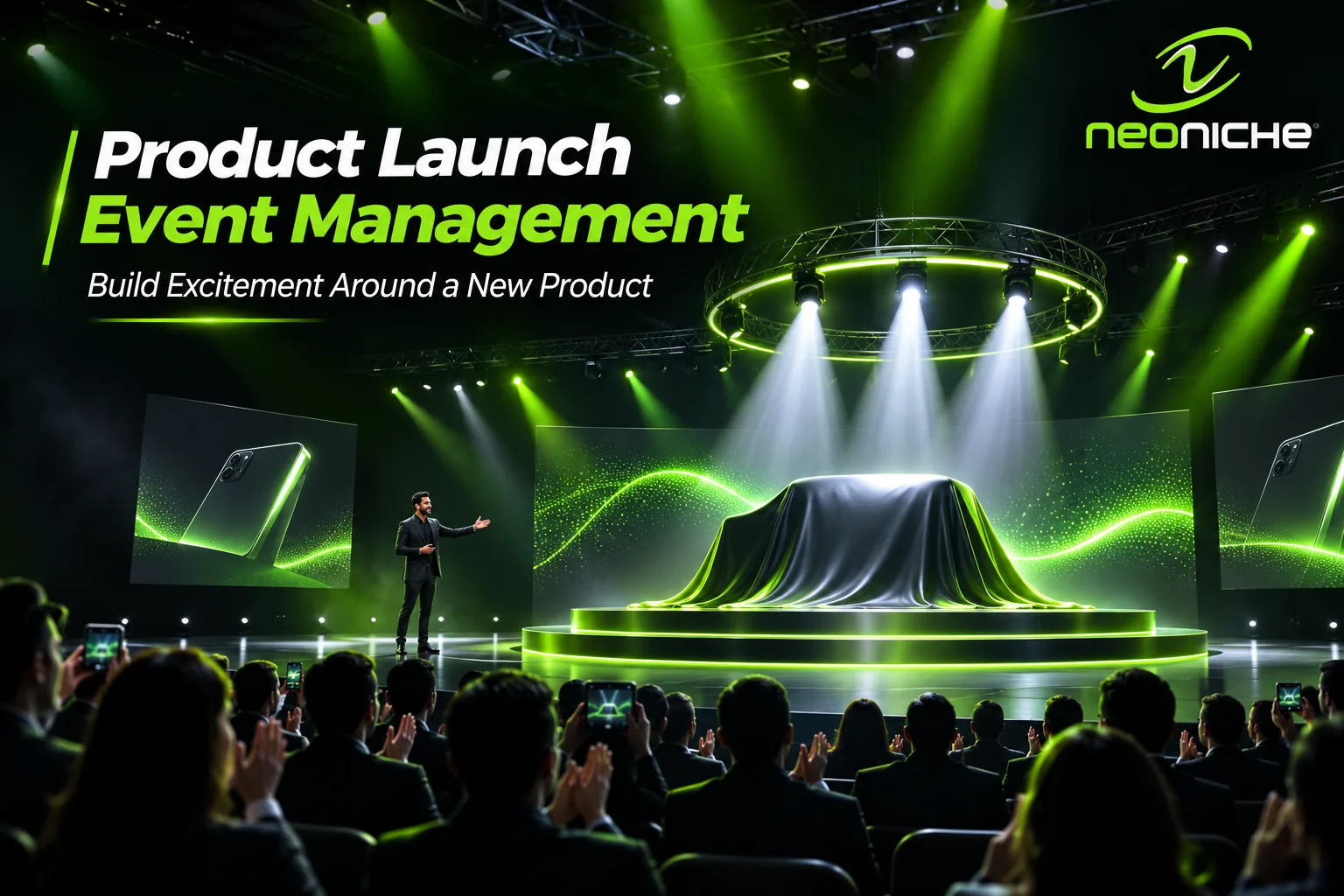
Professional event planning brings together creative storytelling, venue design, technology, audience engagement and coordinated execution.
Businesses looking to understand these strategies can explore this detailed guide on how product launch event management builds excitement around a new product.
The right approach helps brands create anticipation before the launch, maintain audience interest during the event and extend conversations after the product has been introduced.
Creating Memorable Experiences Through Innovative Event Concepts
An effective product launch should communicate more than product specifications. It should demonstrate how the offering fits into customers' lives or solves an existing challenge.
Creative event concepts can make this communication more engaging.
For example, a technology brand may introduce its latest product through interactive demonstrations, while an automotive company may create immersive displays that highlight performance and innovation.
Experiential elements such as live demonstrations, product interaction zones, digital installations and carefully designed reveal moments help audiences connect with a product beyond traditional presentations.
Companies working with an experienced event management and experiential marketing company can bring together creative planning, production expertise and brand communication to develop cohesive launch experiences.
The Importance of Pre-Launch Marketing and Audience Engagement
A successful launch does not begin when guests arrive at the venue. It starts much earlier, when audiences first hear that something new is coming.
Pre-launch activities help generate curiosity and establish expectations.
Brands can use teaser campaigns, personalised invitations, social media announcements, influencer collaborations and targeted communications to introduce the product's story gradually.
The most effective campaigns maintain consistency between pre-launch messaging and the actual event experience.
For instance, if a brand positions its upcoming product around innovation, its launch environment, presentations and demonstrations should reinforce that message.
This consistency strengthens brand recall and helps audiences understand the product's intended positioning.
Combining Technology and Experiential Marketing
Technology has become an important part of modern product launch events.
Interactive screens, immersive visual environments, augmented reality experiences and digital product demonstrations allow brands to communicate information in engaging ways.
However, technology should support the product story rather than distract from it.
A well-designed launch uses digital experiences with a clear purpose, whether that involves explaining technical capabilities, demonstrating product benefits or encouraging audience participation.
Brands can also explore NeoNiche's experiential marketing and event projects to understand how creative concepts and coordinated event execution can contribute to memorable brand interactions.
Why Professional Planning Makes a Difference
Behind every successful product launch is a detailed operational plan.
Venue selection, guest registration, stage production, technical rehearsals, vendor coordination, safety arrangements and event scheduling must work together.
Even a strong creative concept can lose its impact if technical difficulties, poor timing or unplanned interruptions affect the experience.
Professional product launch event management helps businesses anticipate these challenges and maintain coordination between multiple teams.
It also allows internal marketing and leadership teams to focus on product communication, stakeholder engagement and business relationships while event specialists manage the execution.
Extending Product Launch Impact Beyond the Event
A product launch should not end when the event concludes.
Post-event marketing is essential for maintaining interest and converting initial excitement into measurable business opportunities.
Brands can extend their launch campaigns through event highlight videos, product demonstrations, social media content, customer follow-ups, media coverage and targeted digital marketing.
Businesses should also evaluate performance using relevant indicators such as audience attendance, qualified enquiries, product demonstration participation, media mentions and subsequent conversions.
These insights help determine whether the launch achieved its objectives and provide valuable direction for future marketing campaigns.
Conclusion
A successful product launch creates more than a moment of excitement. It introduces a product through a compelling brand story, encourages meaningful audience interactions and establishes a foundation for future customer relationships.
By combining strategic planning, creative storytelling, experiential engagement and professional execution, businesses can turn product introductions into memorable marketing experiences.
For brands preparing to enter new markets or introduce innovative offerings, collaborating with an experienced event management company such as NeoNiche can help connect the product's positioning with an engaging launch experience.
Ultimately, the most effective product launches do not simply tell audiences that something new has arrived. They give people a reason to remember it.