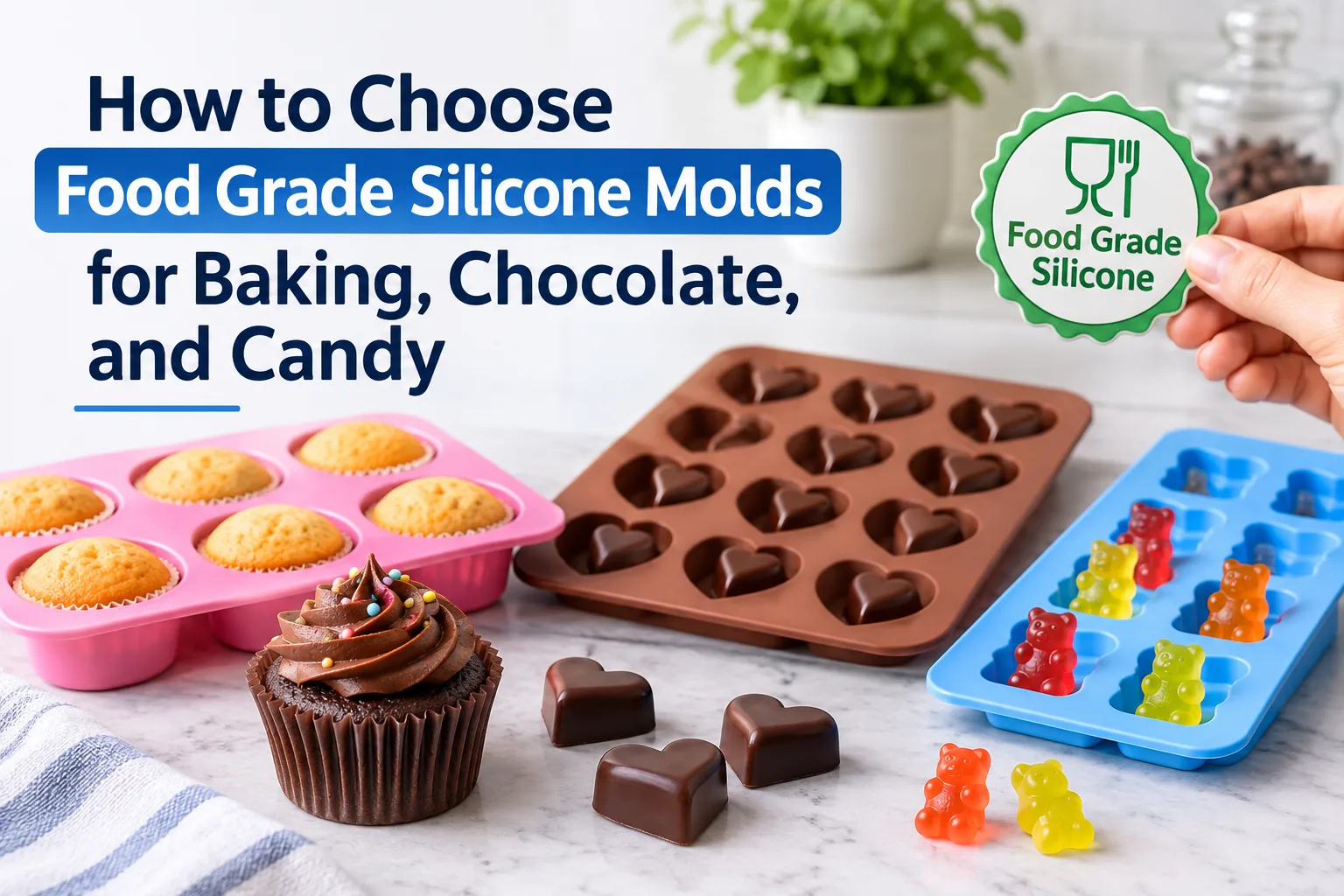
Walk into any kitchen store and you will see rows of colorful silicone molds. They look alike, but they are not equal. Some are made from pure, high-quality silicone that handles heat, cold, and daily washing for years. Others are mixed with cheap fillers that can smell, stain, or break down fast.
If you bake cakes, make chocolates, or pour candy, the mold touches your food directly. That is why food grade silicone molds matter. This guide explains what "food grade" means, what to check before you buy, how to match a mold to your recipe, and what a trustworthy silicone mold company does differently.
What Does "Food Grade" Mean for Silicone Molds?
Food grade means the material is considered safe for direct contact with food. Silicone is a rubber-like material made from silicon, oxygen, carbon, and hydrogen. It does not absorb flavors easily, it stays flexible in heat and cold, and it does not react with most foods. That is why it is so popular for baking and candy making.
Still, not every silicone product is food safe. Quality depends on the raw material, the curing process, and the additives used. Reliable food safe silicone molds are made to meet food-contact rules in the market where they are sold, such as FDA requirements in the United States or LFGB standards in Germany. A label that only says "BPA free" is not enough, because BPA is not a normal ingredient in silicone anyway. Ask for a test report or a certificate instead.
Platinum-Cured vs. Peroxide-Cured Silicone
Most food-contact silicone is cured in one of two ways.
- Platinum-cured silicone uses a platinum catalyst. It leaves almost no by-products, has little to no odor, and is very stable. Many premium baking and baby-product molds use it.
- Peroxide-cured silicone uses a peroxide catalyst. It costs less and can be food safe when it is properly post-cured (heated again to remove leftover by-products) and tested.
Neither label guarantees quality by itself. What matters is that the supplier can tell you which method was used and show test results. If a seller cannot answer this simple question, take it as a warning sign.
How to Spot Food Safe Silicone Molds Before You Buy
You do not need a lab to avoid the worst products. Run through this checklist:
- Smell it. Good silicone has little to no smell. A strong chemical or rubbery odor often points to poor curing.
- Check for certificates. Look for FDA or LFGB compliance and ask for the test report.
- Try the pinch-and-twist test. Twist a flat part of the mold. If it turns white, it may contain fillers. This is a quick home check, not a lab test, so treat it as one clue only.
- Look at the finish. Edges should be clean, the surface smooth, and the color even, with no sticky or oily film.
- Read the temperature rating. A trustworthy product clearly states its safe range, usually printed on the mold or packaging.
- Check the seller. A real supplier explains the material, answers questions, and offers samples.
Choosing the Right Mold for Your Recipe
The same mold is not right for every job. Here is how to match the mold to what you make.
Baking: Choose a Heat Resistant Silicone Mold
For cakes, muffins, and bread, you need a heat resistant silicone mold. Many food grade molds are rated from about -40°C to 230°C (-40°F to 446°F), but ratings differ by product, so always read yours. A few practical tips:
- Place the mold on a metal baking tray before filling it. This keeps it steady and easy to move.
- Do not use it under a direct flame or a broiler.
- Let baked goods cool for a few minutes before unmolding so they hold their shape.
Chocolate: Look for Smooth, Detailed Cavities
Chocolate copies the surface of the mold, so a smooth, polished cavity gives a shiny finish. Choose a mold with sharp detail and a firm but flexible body so the chocolates pop out cleanly. Chocolate does not need oven heat, so surface quality matters more than heat rating. Wash the mold gently without abrasive pads, because scratches show up on every chocolate you make.
Candy and Gummies: Check the Temperature First
Gummies are poured at moderate temperatures, but hard candy syrup can reach around 150°C (300°F). Before pouring, confirm that your mold's rated temperature covers it. Small cavities also need a flexible, tear-resistant material so tiny shapes release without breaking.
Features That Make a Better Mold
- Wall thickness: Too thin and the mold wobbles or tears. Too thick and it is hard to flex. A balanced thickness gives stable support and easy release.
- Rim or base support: A reinforced rim helps you lift a filled mold without spilling.
- Detail quality: Sharp lines and clean edges come from precise tooling, not from the silicone alone.
- Size and shape fit: Match the cavity volume to your recipe so you do not under- or overfill.
How Quality Silicone Molds Are Made
Understanding silicone molds manufacture helps you see why some molds cost more than others. In simple terms, the process looks like this:
- Material selection: The maker chooses food grade silicone rubber and, if needed, food-safe pigments.
- Mixing: The silicone is mixed evenly so color and hardness stay consistent.
- Molding: The material is shaped in a metal tool using compression or liquid injection.
- Curing: Heat sets the silicone into its final, flexible form.
- Post-curing: Many makers heat the finished product again to remove leftover by-products.
- Trimming and inspection: Extra material is removed, and each batch is checked for defects.
Cost-cutting usually happens in steps 1 and 5, through extra fillers or skipped post-curing. That is why a very low price can be a red flag.
Non Toxic Silicone Mold Making at Home
Some bakers and candy makers like to make their own molds from a model. If you do, the rules are simple. Use a silicone rubber that is clearly labeled food safe and made for mold making, because craft or hobby silicone may not be safe for food. Measure the mix ratio exactly, let the mold cure fully, and wash it before first use. Also keep food molds separate from molds you use for resin, soap, or plaster. Once a mold has held non-food materials, do not use it for food.
Why Work With a Silicone Mold Company for Custom Molds
Off-the-shelf molds are fine for hobbies, but food brands often need a unique shape, logo, or size. This is where a professional silicone mold company helps. A good silicone mold company design process usually follows these steps:
- Idea or sketch: You share a drawing, photo, or sample.
- Design and CAD: The designer turns it into a 3D model and checks details like wall thickness and release angles.
- Prototype: A sample mold is made so you can test it.
- Testing and changes: You test with your real recipe, then request changes.
- Production: The final mold is made in the quantity you need.
Before you order, ask the company these questions:
- Which silicone grade do you use, and can you share test reports?
- Is it platinum-cured or peroxide-cured, and is it post-cured?
- What is the minimum order quantity?
- How long do samples and production take?
- Can you make design changes after the first sample?
Simple Care Tips to Make Molds Last
- Wash with warm water and mild soap. Many molds are dishwasher safe, but check the label.
- Avoid knives and sharp tools inside the cavities.
- Store flat so the shape stays true. If a smell lingers, soak the mold in warm water with baking soda, then rinse and dry well.
Frequently Asked Questions
Are food grade silicone molds safe for baking?
Yes, when they are made from genuine food grade silicone and used within their stated temperature range. Check the label and avoid using them under a broiler or open flame.
How can I tell if a silicone mold is food grade?
Check for FDA or LFGB compliance, ask for a test report, and look for little to no odor, clean edges, and a clear temperature rating. The pinch-and-twist test can offer a clue, but it is not a substitute for certificates.
Can food grade silicone molds go in the oven, freezer, and dishwasher?
Most can, but ratings vary. Many handle roughly -40°C to 230°C, yet you should confirm the range printed on your mold. Dishwasher use is usually fine, though hand washing helps molds last longer.
What is the difference between food grade and regular silicone molds?
Food grade molds are made from silicone that meets food-contact standards, using cleaner processes. Regular or craft silicone may include fillers or additives that are not meant for food.
How long do silicone molds last?
With gentle care, good quality molds can last for years. Signs it is time to replace one include tears, a sticky surface, discoloration, or odors that do not go away.
Can I order food molds in a custom shape?
Yes. A silicone mold company can turn your sketch or CAD file into a custom mold, usually after a prototype stage so you can test it first.
Final Thoughts
Choosing food grade silicone molds comes down to a few clear checks: the right material, proper certificates, a suitable temperature rating, and a design that fits your recipe. Whether you bake, make chocolate, or pour candy, take a little time to ask questions before you buy. If you need a custom shape for your brand, work with an experienced silicone mold company that is open about its materials and testing, and always approve a sample before you place a bulk order.