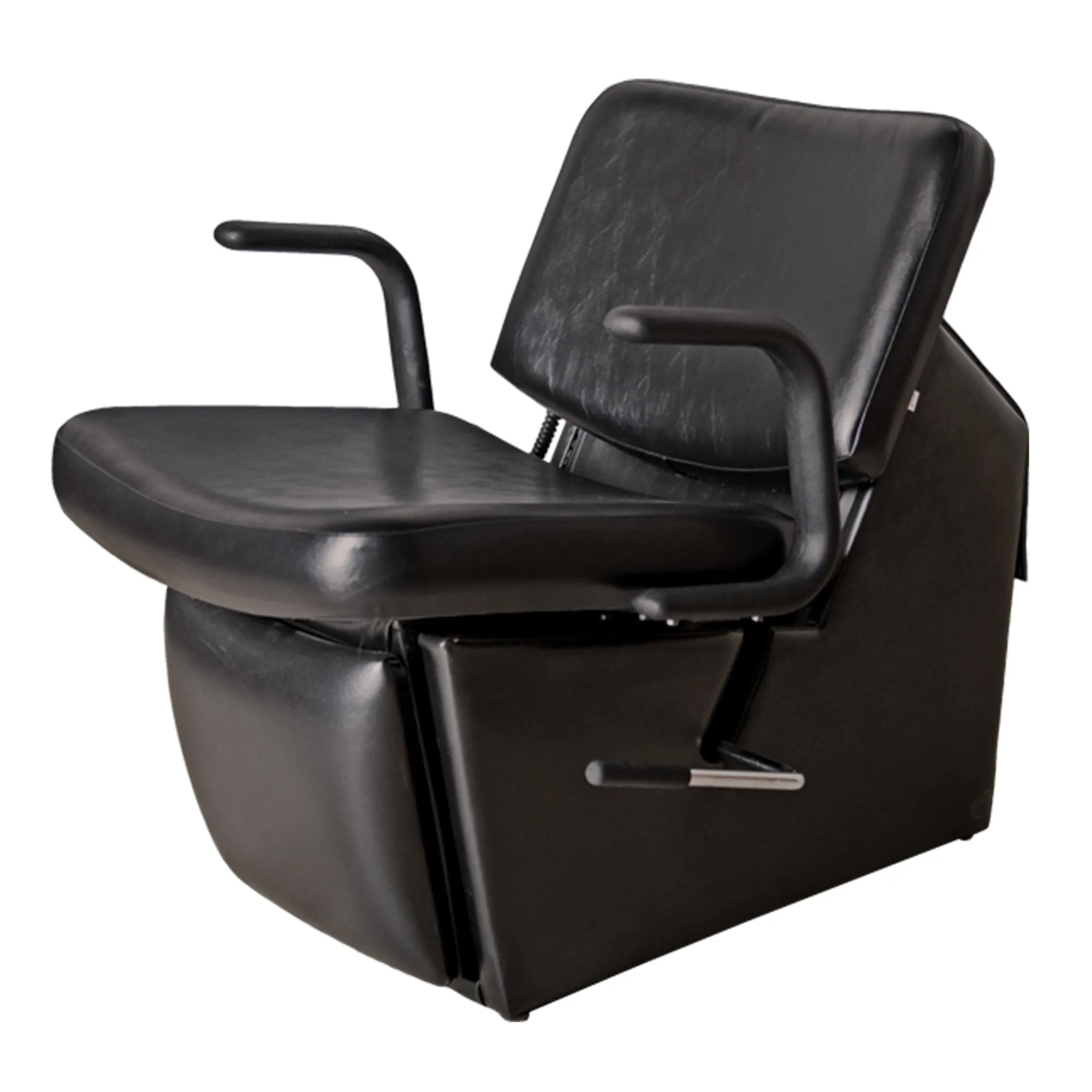
Most clients will never tell you the shampoo hurt. They will tense their shoulders, lift their head off the bowl between rinses, and leave with a stiff neck they quietly blame on your salon. Neck discomfort at the bowl is a familiar complaint, and it is also one of the easiest to prevent once you understand where it comes from.
The surprising part is that the bowl is rarely the main culprit. The shampoo chair decides where the client’s neck lands, how long it stays there, and how much weight it carries. Get the chair right and even a basic bowl feels comfortable. Get it wrong, and no neck cushion will save the experience.
What Happens to the Neck During a Shampoo
An adult head weighs roughly ten pounds. During a wash, all of that weight rests on a narrow strip of the neck where it meets the bowl rim. If the client is positioned correctly, the rim supports the base of the skull and the neck stays close to neutral. If they sit too low, the head tips back past the rim and the front of the neck stretches. If they sit too high, the rim presses into the middle of the neck and the client starts holding their head up to escape the pressure.
A quick rinse might hide the problem. A long color rinse, a deep conditioning treatment or a scalp massage will not. Those are exactly the services where clients expect to relax the most, which makes positioning even more important.
Height Adjustment Does More Than Any Cushion
If you take one thing from this article, make it this. The ability to raise and lower the seat is the single most important neck support feature in a shampoo chair.
Clients come in every height, and torso length varies even more than overall height. A fixed seat height puts a tall client’s neck in a completely different spot on the rim than a petite client’s. An adjustable height shampoo chair lets the stylist set the client so the rim meets the right point every time. Many lever control models on the market offer this, and it is worth paying a little more for.
How the Recline Mechanism Affects Comfort
A reclining shampoo chair brings the client back toward the bowl in a controlled way, but the mechanism behind that movement changes how the wash feels.
Spring recline chairs let the backrest move with the client’s weight. They feel natural and are simple to operate, though the client’s body sets the angle rather than the stylist. Lever and handle recline chairs let the stylist choose and lock an angle, which helps when you need to fine-tune neck position for someone with limited flexibility. Electric low-voltage models recline at the push of a button. They cost more, but in a high-volume salon, they take a lot of physical effort out of positioning clients all day.
None of these is wrong. The right choice depends on your clients and how much control your stylists want over the final angle.
Why Legrests Help the Neck
It sounds backward, but supporting the legs is one of the best ways to support the neck. When a client reclines without anything under their legs, they tend to slide forward on the seat over the course of the wash. As the hips move forward, the head drifts off the rim, and the stylist has to keep repositioning them.
A legrest locks the body in place. The hips stay back, the spine stays straight, and the neck stays where the stylist set it. For services longer than a few minutes, a shampoo chair with a legrest makes a noticeable difference. Several models include a lever legrest, and some offer a locking leg rest for extra stability.
Cushioning, Seat Width and Back Height
Thick, supportive upholstery keeps clients from sinking into the seat, which would change their height relative to the bowl as the minutes pass. Firm padding holds them steady. Thin padding compresses and lets them slump.
Seat width deserves more attention than it usually gets. A client who feels squeezed between the arms will shift and fidget, and every shift moves their neck. Wide models and chairs built for larger clients, such as 27-inch-wide seats, keep everyone comfortable enough to stay still. Back height matters too. A backrest that supports the shoulders gives the upper body something to lean on so the neck is not doing all the work.
You can compare these options side by side in the professional shampoo chair collection, which includes spring recline, lever control, wide seat, and electric models with and without legrests.
Do Not Forget the Neck Rest Itself
Once the chair puts the client in the right position, a quality neck rest on the bowl finishes the job. Gel and cushioned neck rests soften the rim and spread pressure over a wider area. They also wear out. If the neck rest on your bowl is cracked, flattened, or hard to clean, replacing it is one of the cheapest comfort upgrades in the salon. Replacement neck rests for shampoo bowls come in a range of styles, so you can match the one on your bowl.
What to Check Before You Buy
Before you order, sit in the chair yourself if you can, at your own bowl, and stay there for five full minutes. You will feel within that time whether your neck is resting or working. If buying online, check that the seat height adjusts and confirm the recline type. Decide whether your services call for a legrest, and measure your space for the chair in its fully reclined position, not just upright. Then ask about lead times, since many models are built to order and take four to six weeks.
A comfortable wash is what clients describe when they tell a friend about your salon. The right shampoo chair helps ensure they describe it well.