
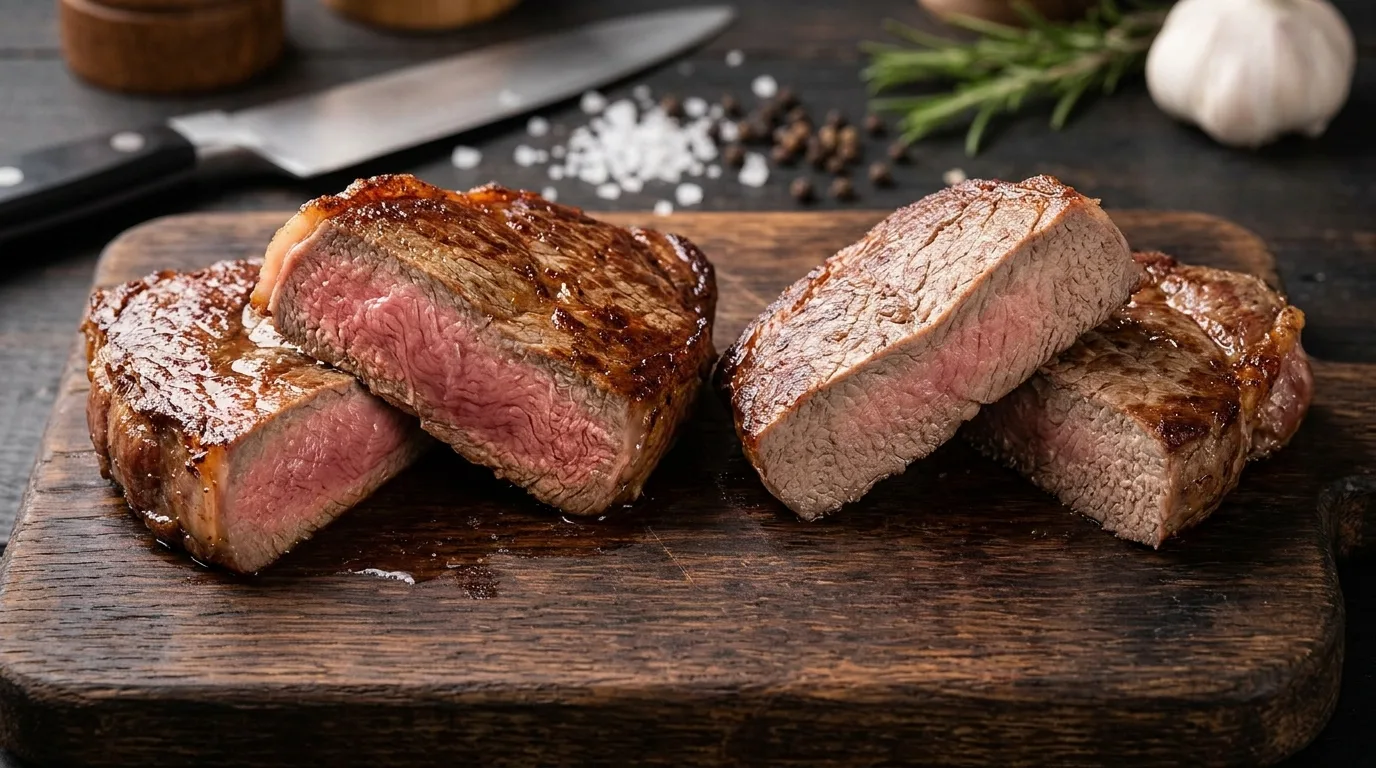
The difference between medium and medium well steak comes down to about 5°C and a surprising amount of juice. A medium steak finishes at around 63°C (145°F) with a warm pink centre, while medium well reaches roughly 68°C (155°F) and keeps only a faint blush of pink. That small gap changes how tender, juicy and beefy the steak tastes. Here is how each looks, eats and cooks, which cuts suit which, and how to land on the right temperature.
Medium vs Medium Well Steak at a Glance
MediumMedium WellFinal temperature60 to 63°C (140 to 145°F)65 to 68°C (150 to 155°F)Centre colourWarm pinkSlight hint of pinkTextureTender, springyFirmer, chewierJuicinessJuicyNoticeably drierBest forMost cutsThick, fatty cutsIf you want the short verdict, medium keeps more moisture and beefy flavour, while medium well suits anyone who prefers little to no pink.
What Is a Medium Steak?
Medium Steak TemperatureA medium steak finishes between 60 and 63°C (140 to 145°F) after resting. Because the meat keeps cooking once it leaves the heat, pull it off at about 57 to 58°C. Carryover cooking will add another 3 to 5°C while it rests.
What Does a Medium Steak Look Like?Cut one open and you will see a warm pink centre with a thin band of grey brown around the edges. The juices run light pink rather than red. Press the surface and it feels springy, with a little resistance.
What Does Medium Steak Taste Like?This is where the steak hits a sweet spot. The crust is caramelised, the centre is still moist, and the fat has softened enough to add richness without turning greasy. Many chefs consider it the point where flavour and tenderness meet.
What Is a Medium Well Steak?
Medium Well Steak TemperatureMedium well finishes at 65 to 68°C (150 to 155°F). Take the steak off the heat at around 62 to 63°C and let carryover cooking do the rest. Overshoot by just a few degrees and you are in well done territory.
What Does a Medium Well Steak Look Like?The inside is mostly brown, with only a slight pink tinge at the very centre. Juices are clear or very pale. When pressed, the steak feels firm, with little give.
What Does Medium Well Steak Taste Like?Expect a more roasted, savoury flavour and a firmer bite. Less moisture remains in the meat, so there is less juice on the plate. That said, a well-marbled cut still eats beautifully at this level because rendered fat helps compensate.
Key Differences Between Medium and Medium Well Steak
Temperature and ColourThe gap is small on a thermometer but easy to see on the plate. Medium has a proper pink centre, while medium well is brown almost through to the middle.
Juiciness and Moisture LossAs steak heats, its muscle fibres tighten and squeeze out water. By medium well, a good share of that moisture has escaped, which is why the steak feels drier. This is the single biggest practical difference between the two.
Tenderness and TextureMedium has a soft, yielding bite. Medium well is firmer and takes more chewing, particularly in leaner cuts. Cutting against the grain helps at both levels.
FlavourBoth develop deep browned flavour on the outside through the Maillard reaction. Medium preserves more of the fresh, beefy taste of the meat itself. Medium well leans toward a roasted flavour, and the longer cooking can mute some of the subtler notes.
Fat Rendering and MarblingLonger cooking melts more fat. In a heavily marbled steak, that can be a real advantage at medium well, since the extra rendering keeps the meat from tasting dry. In a lean steak, there is not enough fat to offer the same cushion.
Which Is Better: Medium or Medium Well?
There is no universal winner, and the right answer depends on who is eating. If you are still working out where you sit on the doneness scale, this guide to choosing the best steak cooking level is a handy companion.
Choose Medium If…You want the most juice and flavour from a good cut, and you are comfortable with a little pink. It is also the easiest level to cook consistently, because the window for getting it right is wider.
Choose Medium Well If…You or your guests dislike pink, you are cooking for children or older relatives, or you simply prefer a firmer bite. Nothing is wrong with that preference, and cooking the steak well is part of cooking it kindly for the table.
Best Cuts for Medium and Medium WellRibeye, striploin, T-bone and sirloin handle both levels well, with ribeye being the most forgiving at medium well thanks to its marbling. Fillet is the cut to treat with care. It is very lean, so it can dry out quickly past medium. If you are cooking fillet for someone who wants medium well, use a thicker cut and watch the temperature closely.
How to Tell When Steak Is Medium or Medium Well
Using a Meat ThermometerAn instant-read thermometer is the only method I fully trust. Insert it sideways into the thickest part, away from any bone, and read it as the steak comes off the heat.
The Finger Touch TestTouch your thumb to your middle finger and press the fleshy base of your thumb. That firmness matches medium. Pressing thumb to ring finger gives you the firmer feel of medium well. It is a useful backup, though hand size and steak thickness make it less precise.
Looking at Colour and JuicesCutting into a steak to check it lets juices escape and tells you little until it is too late. Use colour to confirm, not to decide.
Common Mistakes When Cooking Medium and Medium Well Steak
- Skipping the rest, which sends juices straight onto the board
- Forgetting carryover cooking and pulling the steak too late
- Cooking straight from the fridge, which leaves the centre cold and the outside overdone
- Going by time alone without checking the temperature
- Pressing the steak with a spatula and squeezing out the juices
Medium vs Medium Well vs Other Steak Doneness Levels
DonenessFinal temperatureRare49 to 52°C (120 to 125°F)Medium rare54 to 57°C (130 to 135°F)Medium60 to 63°C (140 to 145°F)Medium well65 to 68°C (150 to 155°F)Well done71°C+ (160°F+)Medium sits just past medium rare, where the centre turns from deep pink to warm pink. Medium well is a step beyond, a short distance from well done.
Final Thoughts
Medium and medium well are close on the thermometer but quite different on the plate. Medium offers more juice and a fuller beef flavour, while medium well gives a firmer bite for anyone who prefers little or no pink. Neither is wrong. Choose a cut that suits your preferred level, use a thermometer, and rest the steak before slicing. Do those three things and you will get a good result at either doneness.
FAQs
What is the temperature difference between medium and medium well steak?Roughly 5°C. Medium finishes around 63°C (145°F) and medium well around 68°C (155°F).
Is medium well steak dry?It can be, particularly with lean cuts. A marbled, thick steak cooked with care and properly rested stays pleasantly juicy.
Is medium or medium well better for ribeye?Medium is generally better for flavour and juiciness, but ribeye is one of the best cuts to take to medium well because its fat keeps it tender.
Can you cook a fillet to medium well without drying it out?Yes, though it takes care. Choose a thick fillet, use gentle heat after searing and pull it off promptly.
How long does it take to cook medium vs medium well steak?A 2.5 cm steak takes around 6 to 8 minutes in total for medium and 10 to 12 minutes for medium well, depending on heat.
Which doneness do most chefs recommend?Most chefs favour medium rare to medium for quality cuts, but they will happily cook medium well when a guest asks for it.