The paper packaging industry has witnessed tremendous growth due to increasing demand for sustainable and eco-friendly packaging solutions. From corrugated boxes and cartons to paper bags and packaging boards, manufacturers must ensure that their products meet strict quality standards. This is where a reliable Paper Packaging Testing Instruments Manufacturer plays a crucial role.
Testing instruments help manufacturers evaluate the strength, durability, moisture resistance, and overall performance of paper packaging materials. By using advanced testing equipment, businesses can minimize product failures, improve customer satisfaction, and comply with industry regulations.
Why Quality Testing is Important in Paper Packaging
Packaging serves as the first line of protection for products during storage, transportation, and handling. Poor-quality packaging can lead to product damage, financial losses, and customer dissatisfaction.
Quality testing helps manufacturers:
- Ensure product consistency
- Reduce packaging failures
- Meet industry standards
- Improve customer confidence
- Optimize production processes
- Reduce material wastage
- Enhance brand reputation
Essential Paper Packaging Testing Instruments
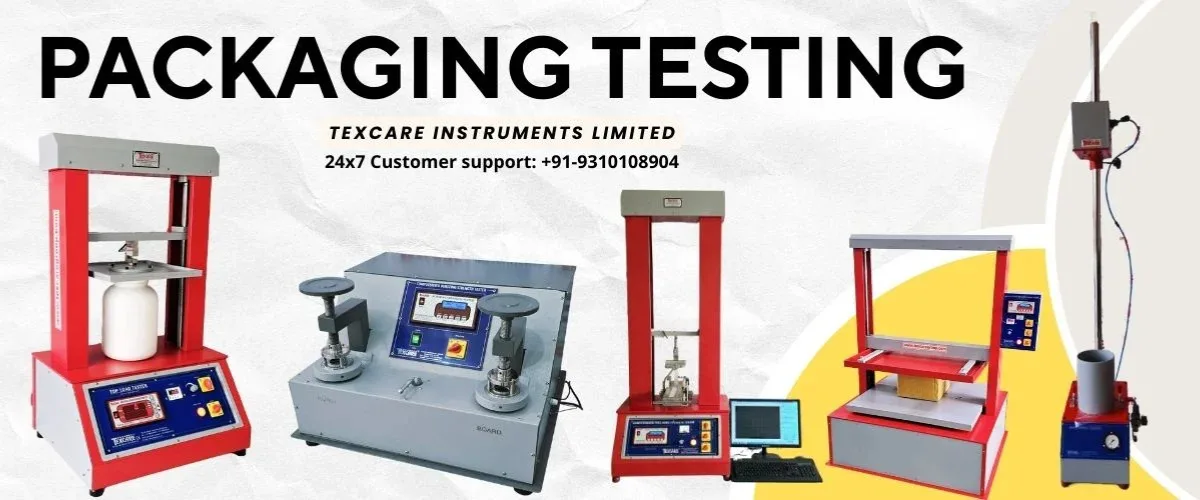
1. Box Compression Tester
A Box Compression Tester evaluates the compressive strength of corrugated boxes and cartons. It measures how much load a box can withstand before collapsing.
Benefits:- Determines stacking strength
- Prevents transportation damage
- Ensures packaging durability
2. Burst Strength Tester
A Burst Strength Tester measures the resistance of paper and packaging materials against rupture under pressure.
Applications:- Corrugated boxes
- Paperboards
- Packaging papers
- Cartons
3. Edge Crush Tester (ECT)
The Edge Crush Tester determines the edgewise compressive strength of corrugated boards.
Advantages:- Assesses box performance
- Evaluates board quality
- Supports packaging design improvements
4. Cobb Tester
A Cobb Tester measures the water absorption capacity of paper and board materials.
Importance:- Evaluates moisture resistance
- Ensures print quality
- Improves packaging performance in humid conditions
5. GSM Round Cutter
The GSM Round Cutter is used to determine the Grammage (GSM) of paper and board materials.
Benefits:- Ensures material consistency
- Helps maintain production standards
- Supports quality control procedures
6. Tensile Strength Tester
A Tensile Strength Tester measures the force required to break paper or packaging materials.
Applications:- Paper mills
- Packaging manufacturers
- Quality control laboratories
7. Ply Bond Tester
The Ply Bond Tester evaluates the bonding strength between layers of corrugated board.
Key Advantages:- Ensures structural integrity
- Improves box strength
- Reduces packaging failures
Industries Using Paper Packaging Testing Instruments
Paper packaging testing equipment is widely used across industries such as:
- Corrugated Box Manufacturing
- Packaging Material Manufacturing
- Paper Mills
- Printing Industry
- FMCG Packaging
- Food & Beverage Industry
- Pharmaceutical Packaging
- E-commerce Packaging
Benefits of Choosing a Trusted Paper Packaging Testing Instruments Manufacturer
Selecting the right testing equipment manufacturer ensures accuracy, reliability, and long-term performance.
Look for:
- High-precision instruments
- Compliance with ASTM, ISO, TAPPI, and BIS standards
- Strong technical support
- Calibration services
- User-friendly operation
- Durable construction
- Custom testing solutions
How Testing Instruments Improve Packaging Quality
Advanced testing instruments provide valuable insights into packaging performance. Manufacturers can identify weaknesses before products reach customers, reducing complaints and returns.
Testing enables businesses to:
- Improve packaging design
- Reduce material costs
- Increase production efficiency
- Ensure regulatory compliance
- Enhance product safety
Future of Paper Packaging Testing
As sustainability becomes a major focus worldwide, the demand for high-quality paper packaging continues to grow. Modern testing instruments now feature:
- Digital control systems
- Automated testing functions
- Data logging capabilities
- Computerized reporting
- Industry 4.0 compatibility
These innovations help manufacturers achieve greater accuracy and efficiency in quality control processes.