
Meeting Modern Poultry Processing Needs
The poultry industry is growing steadily as chicken remains a preferred protein choice across the world. With this growth, processors are under pressure to deliver safe, uniform, and high-quality products in large volumes. Manual processing alone often cannot keep up with these expectations. It can lead to uneven cuts, product waste, and increased worker fatigue.
Modern poultry machines help solve these challenges by improving accuracy, hygiene, and efficiency. Equipment designed for slicing, dicing frozen meat, and removing skin plays a major role in helping processors maintain steady production while meeting food safety requirements.
The Importance of Automation in Poultry Plants
Automation has become a key part of poultry processing for businesses of all sizes. Machines reduce the need for repetitive manual tasks and allow processors to maintain consistent results throughout the production day.
Some key advantages of automated poultry equipment include:
- Uniform product size for better presentation
- Reduced handling, which supports food safety
- Lower raw material waste and improved yield
- Faster processing with less worker strain
These benefits help businesses control costs while improving overall product quality.
Precision Slicing for Boneless Chicken Portions
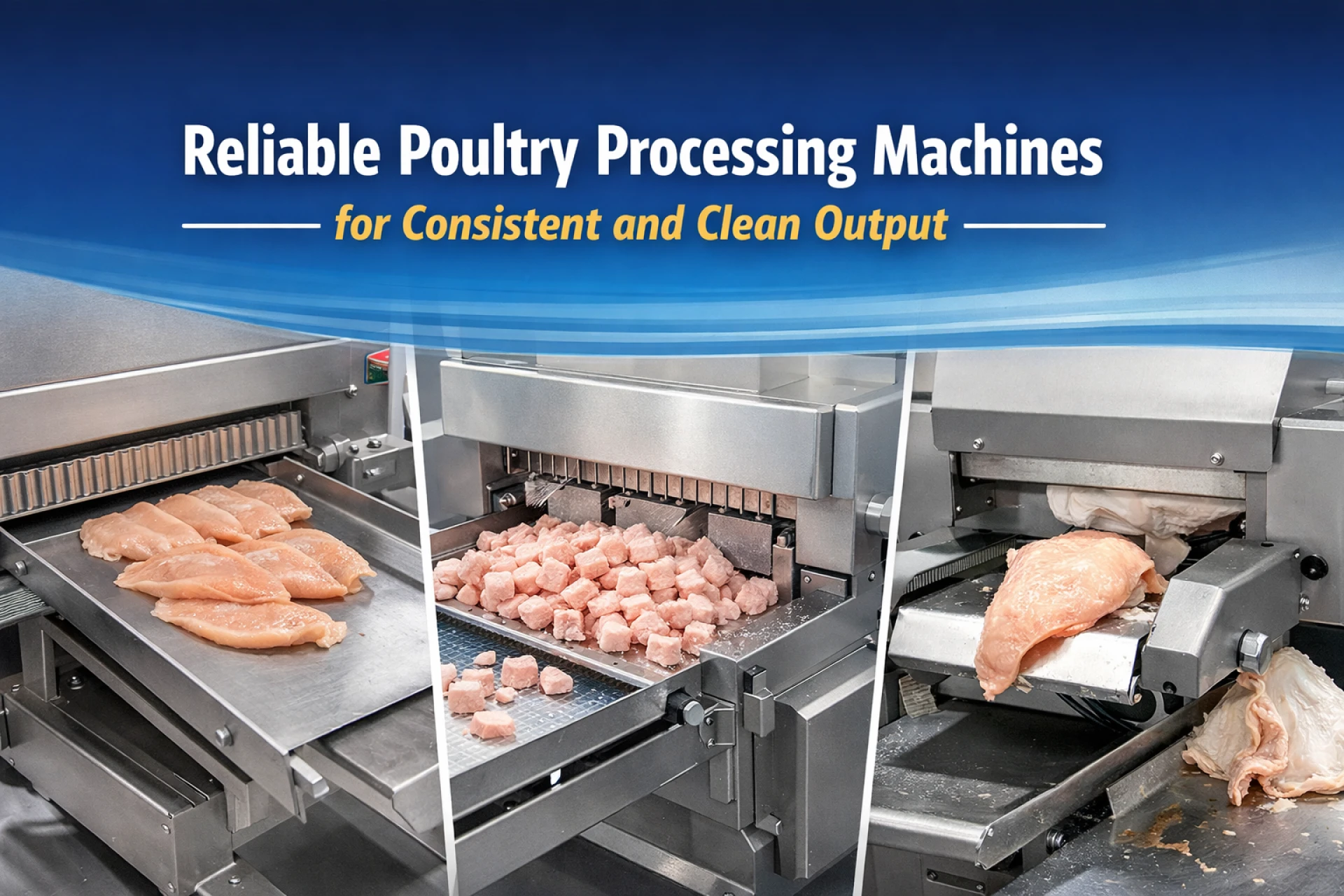
Producing evenly sliced chicken breast portions is important for food service suppliers and retail brands. The Horizontal Chicken Breast Slicing Machine is designed specifically for this purpose. It slices chicken breasts evenly along the horizontal plane, creating consistent thickness across every portion.
Processors can adjust slice thickness to suit different menu or packaging needs. Uniform slicing helps ensure even cooking and a professional appearance. This type of machine is commonly used for fillets, layered cuts, and portion-controlled products that require accuracy and repeatability.
Key benefits include:
- Adjustable cutting thickness
- Stable operation for high-volume output
- Reduced rework due to consistent slicing
- Hygienic stainless steel construction
- Handling Frozen Poultry with Accuracy
Frozen poultry products are widely used because they are easier to store and transport. Cutting frozen meat manually can be unsafe and inefficient. The Frozen Chicken Cube Cutting Dicing Machine is designed to cut frozen chicken blocks into clean, evenly sized cubes or dices.
This machine works smoothly on semi-frozen and frozen meat without damaging texture. Uniform cube sizes are important for ready meals, packaged foods, and further processing, as they support even cooking and better visual appeal.
Advantages of frozen cutting equipment include:
- Clean cuts without crushing frozen meat
- Consistent cube sizes for reliable cooking results
- Reduced meat loss during processing
- Strong build suitable for continuous operation
- Clean and Efficient Skin Removal
Skin removal is another critical step in poultry processing. When done manually, it can lead to uneven results and product damage. The Chicken Breast Skinning Machine removes skin smoothly while keeping the meat intact.
This machine uses controlled blade movement and adjustable pressure to match different breast sizes. It delivers clean, skin-free chicken breasts that meet market requirements, especially for health-focused and ready-to-cook products.
Main advantages include:
- Smooth skin removal with minimal meat loss
- Adjustable settings for different product sizes
- Reduced manual handling for better hygiene
- Improved safety and comfort for workers
- Supporting Hygiene and Food Safety Standards
Food safety is a top concern in poultry processing facilities. Modern machines are built using food-grade stainless steel, which resists corrosion and supports easy cleaning. Smooth surfaces and open designs make daily sanitation faster and more effective.
Using hygienic equipment helps processors meet regulatory guidelines and maintain buyer confidence. Clean processing environments also reduce the risk of contamination and product recalls.
Improving Productivity and Workforce Efficiency
Automation allows processors to increase output without increasing physical workload. Tasks such as slicing, dicing, and skinning require precision and repetition, which machines handle more efficiently than manual labor.
Benefits for operations include:
- Faster production cycles
- Reduced worker fatigue and injury risk
- More consistent daily output
- Better focus on quality control
Industry data suggests that automated processing lines can improve productivity by up to 30–40 percent over manual methods.
Conclusion: Building a Smarter Poultry Processing Line
Modern poultry processing depends on accuracy, hygiene, and efficiency. Equipment designed for slicing fresh chicken, cutting frozen meat, and removing skin helps processors maintain consistent quality while meeting growing demand. By investing in the right machines and integrating them into a smooth workflow, poultry businesses can reduce waste, improve safety, and achieve long-term operational stability.