India's digital payments ecosystem has transformed the way people transact. From paying utility bills and shopping online to transferring money within seconds, digital payments have become a part of everyday life. At the centre of this transformation is the Unified Payments Interface (UPI), a system that has made instant bank-to-bank transfers simple and accessible for millions of users.
While most people focus on the convenience of UPI transactions, businesses operating in the digital economy face a different challenge. Before enabling payments, onboarding users, or offering financial services, they need confidence that the customer information being provided is accurate and genuine.
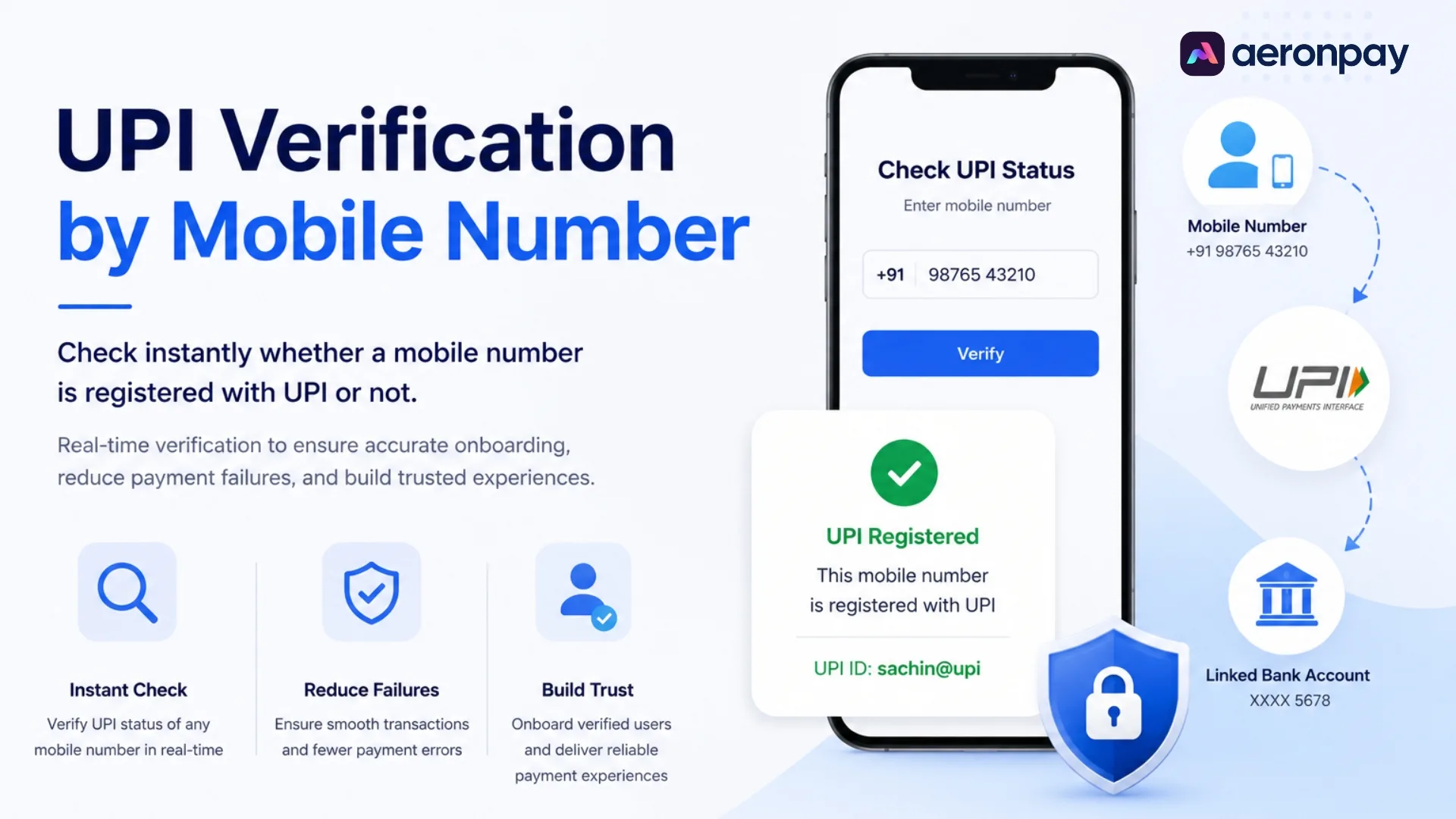
This is where UPI Mobile Verification becomes important.
A mobile number is often the first piece of information a customer shares while signing up for a financial product or service. Verifying whether that number is linked to a valid UPI account helps businesses establish trust at the very beginning of the customer journey.
As digital fraud risks continue to evolve and customer expectations for seamless experiences increase, UPI Mobile Verification is emerging as a critical building block for secure and efficient digital payments.
Understanding the Role of Mobile Numbers in the Digital Payments Ecosystem
A decade ago, mobile numbers were primarily used for communication. Today, they serve a much larger purpose.
For many users, a mobile number acts as a digital identity across multiple services, including banking, payments, lending, insurance, investments, and e-commerce platforms.
In the UPI ecosystem, mobile numbers are closely connected with bank accounts and payment identities. When users register for UPI services, their mobile number becomes an important element in establishing and managing their digital payment profile.
Because of this connection, businesses increasingly rely on mobile numbers to initiate customer onboarding, verify user information, and facilitate secure transactions.
However, collecting a mobile number is one thing. Confirming that it belongs to the intended user and is associated with a valid UPI account is another.
That distinction can make a significant difference in preventing onboarding errors, reducing fraud risks, and improving customer experiences.
Why UPI Mobile Verification Matters More Than Ever
The rapid growth of digital payments has created enormous opportunities for businesses. At the same time, it has increased the importance of identity verification.
Whether a company operates in fintech, lending, wealth management, insurance, gaming, e-commerce, or subscription services, customer verification has become a critical operational requirement.
Reducing Incorrect User Information
One of the most common challenges businesses face is inaccurate customer data.
Users may accidentally enter the wrong mobile number during registration. In some cases, outdated numbers may be provided. These mistakes can create downstream issues, including failed communications, incomplete onboarding, and transaction-related complications.
UPI Mobile Verification helps organisations identify and address these issues early in the process.
Strengthening Trust During Onboarding
The first interaction between a customer and a platform often determines the overall user experience.
When businesses can verify customer information quickly and accurately, they create a smoother onboarding journey while building trust from the outset.
Customers are also more likely to feel confident when platforms have robust verification mechanisms in place.
Supporting Fraud Prevention Efforts
Fraud prevention is a growing concern across the digital economy.
As payment volumes increase, fraudsters continue to explore new ways to exploit weaknesses in onboarding and verification processes.
Verifying the connection between a mobile number and a UPI identity adds a layer of validation that can help businesses strengthen their risk management frameworks.
The Challenges of Traditional Verification Methods
Many businesses still rely on verification processes that were designed for a different era of digital services.
These methods often involve:
- Manual verification checks
- Basic OTP validation
- Multiple customer touchpoints
- Human review processes
- Delayed confirmation workflows
While these approaches may work in certain situations, they often struggle to keep pace with modern customer expectations.
Today's users expect onboarding experiences that are fast, simple, and completed within minutes.
Long verification journeys can lead to customer frustration and increased abandonment rates.
For businesses, manual verification processes can also increase operational costs and place additional pressure on customer support teams.
The challenge is no longer simply verifying users. It is verifying them efficiently without creating unnecessary friction.
How UPI Mobile Verification Improves Operational Efficiency
Businesses are increasingly adopting API-driven verification solutions because they offer a practical way to improve both accuracy and efficiency.
Faster Customer Onboarding
Speed plays a crucial role in customer acquisition.
A lengthy onboarding process can result in users abandoning an application before completion.
By validating information in real time, businesses can streamline onboarding journeys and reduce delays.
Better Data Quality
Poor-quality customer data affects multiple departments, from operations and compliance to customer service and marketing.
Verification helps ensure that customer records are accurate from the beginning, reducing the need for corrections later.
Lower Operational Burden
When customer information is validated early, businesses spend less time handling verification-related issues, support requests, and manual reviews.
This allows teams to focus on higher-value activities instead of routine administrative tasks.
Improved Customer Experience
Customers generally prefer digital experiences that are simple and efficient.
Verification processes that work quietly in the background help create smoother interactions without requiring additional effort from users.
Why UPI Mobile Verification Matters Across Industries
Although UPI is commonly associated with payments, the benefits of mobile verification extend well beyond transaction processing.
Fintech Platforms
Fintech companies use verification to support onboarding, account creation, and payment-related services.
Lending Businesses
Lenders require accurate customer information to assess applications and communicate effectively with borrowers.
Insurance Providers
Verification helps ensure policyholders can be contacted reliably throughout the customer lifecycle.
E-commerce Platforms
Merchants benefit from accurate customer information for payments, refunds, and order-related communication.
Subscription-Based Businesses
Recurring payment models depend heavily on reliable customer identity and payment information.
In each of these sectors, verification contributes to operational efficiency and customer trust.
The Growing Importance of Verification in a Digital-First Economy
India's digital economy continues to expand rapidly.
Consumers are increasingly comfortable using digital financial services, and businesses are investing heavily in technology-driven customer experiences.
As this shift continues, verification is likely to become even more important.
Customers want convenience, but they also expect security.
Businesses want growth, but they must manage risk.
Verification sits at the intersection of these two priorities.
Rather than being viewed solely as a compliance requirement, it is increasingly becoming a strategic capability that supports long-term business growth.
Future Outlook: Verification Will Become More Intelligent
The future of digital payments is likely to be defined by greater automation, faster transactions, and more connected financial ecosystems.
Verification technologies will evolve alongside these changes.
Businesses can expect:
- More real-time verification capabilities
- Smarter fraud detection systems
- Increased automation in onboarding workflows
- Better integration across financial services
- Enhanced customer experiences with fewer manual steps
As digital interactions become more sophisticated, the ability to establish trust quickly and accurately will become a key differentiator.
Businesses that invest in strong verification infrastructure today will be better positioned to meet future customer expectations.
As digital payments become increasingly central to everyday transactions, trust remains one of the most important factors behind every successful interaction.
UPI Mobile Verification may seem like a simple step, but its impact extends far beyond customer onboarding. It helps businesses improve data accuracy, strengthen verification processes, reduce operational inefficiencies, and create better user experiences.
In a digital-first economy where speed and security must coexist, verifying customer information at the very beginning of the journey is not just a technical process; it is a business necessity. Businesses that prioritise strong verification practices today will be better equipped to build trusted and scalable digital payment experiences in the years ahead.