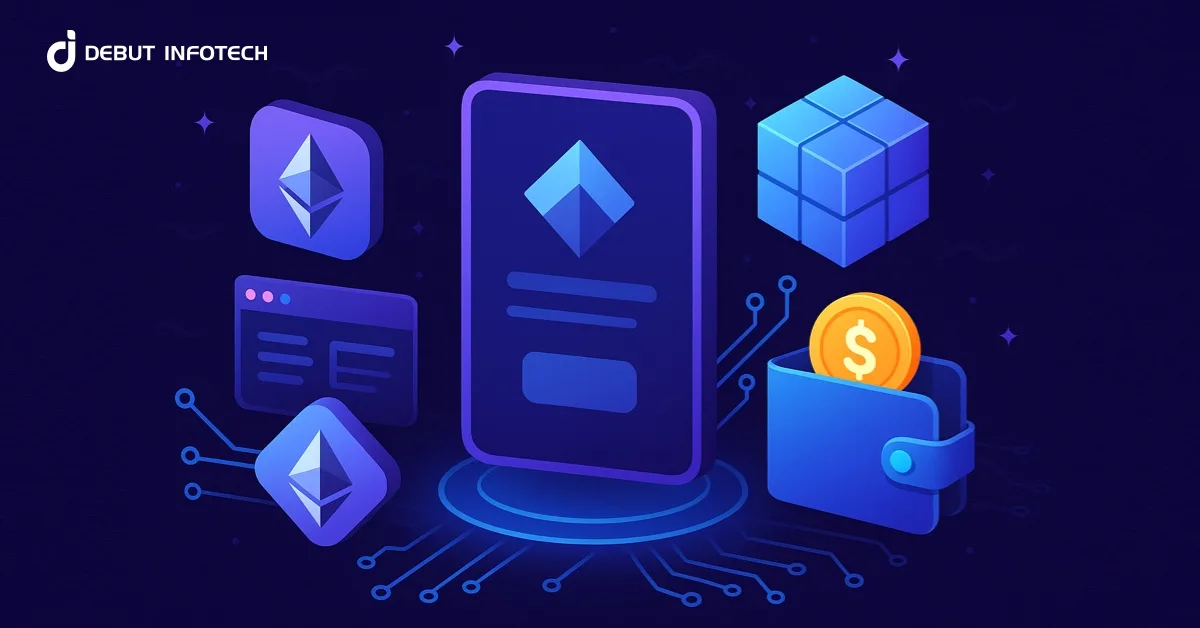
Decentralized applications (dApps) are transforming how businesses build and deliver digital services. Unlike traditional applications that rely on centralized servers, dApps operate on blockchain networks, offering greater transparency, security, and user control.
From decentralized finance (DeFi) platforms and NFT marketplaces to blockchain-based gaming and enterprise applications, businesses are increasingly exploring dApps to create innovative digital experiences.
However, developing a successful dApp requires more than blockchain coding. It involves smart contract development, blockchain integration, UI/UX design, security testing, and ongoing maintenance. This is where a professional dApp development partner becomes valuable.
Let's explore the key services a dApp development company provides and how these services help businesses turn their decentralized application ideas into reality.
1. dApp Consulting and Strategy Development
Before starting development, businesses need a clear understanding of how a decentralized application will support their goals. Consulting services help identify the right blockchain network, application architecture, and development approach.
A development team evaluates business requirements and recommends a suitable strategy for building a scalable and secure dApp.
Key services include:
- Business requirement analysis.
- Blockchain platform selection.
- dApp architecture planning.
- Use case identification.
- Technical feasibility assessment.
- Development roadmap creation.
This initial planning helps businesses avoid unnecessary development expenses and ensures that the application is built around actual business requirements.
2. Smart Contract Development
Smart contracts are one of the most important components of decentralized applications. They are self-executing programs that automatically enforce predefined rules when specific conditions are met.
A dApp development team creates and deploys smart contracts to automate transactions, manage digital assets, and execute business processes without requiring traditional intermediaries.
Key services include:
- Custom smart contract development.
- Solidity and other blockchain programming.
- Smart contract integration.
- Contract optimization.
- Automated business logic implementation.
- Smart contract testing and auditing coordination.
Well-designed smart contracts help improve operational efficiency while reducing manual intervention and transaction-related errors.
3. Custom dApp Development
Every business has different requirements, which is why custom dApp development plays an important role in blockchain adoption.
Development teams build decentralized applications based on specific business models, target audiences, and technical requirements.
These applications can support various use cases, including decentralized finance, digital marketplaces, gaming, and enterprise operations.
Key services include:
- Frontend and backend dApp development.
- Blockchain connectivity.
- Wallet integration.
- Transaction management.
- Decentralized data integration.
- Custom application functionality.
A customized approach ensures that the application delivers relevant features while maintaining the benefits of decentralized technology.
4. DeFi Application Development
Decentralized finance has become one of the most popular applications of blockchain technology. DeFi platforms allow users to access financial services without relying entirely on traditional financial intermediaries.
A dApp development team can build decentralized financial platforms that support automated financial operations and peer-to-peer transactions.
Key services include:
- Decentralized exchange (DEX) development.
- Lending and borrowing platform development.
- Yield farming platform development.
- Staking application development.
- Liquidity pool integration.
- DeFi smart contract development.
These solutions help businesses explore new financial models and create decentralized financial ecosystems.
5. NFT Marketplace Development
NFT marketplaces allow users to create, buy, sell, and trade digital assets using blockchain technology. Businesses can use these platforms for digital art, gaming assets, collectibles, and tokenized ownership.
Development teams create NFT marketplaces with features that support secure transactions and efficient digital asset management.
Key services include:
- NFT marketplace development.
- NFT minting and trading functionality.
- Smart contract integration.
- Crypto wallet connectivity.
- NFT collection management.
- Royalty and payment configuration.
These platforms enable creators, brands, and businesses to establish digital ownership-based marketplaces.
6. Blockchain Integration Services
Businesses that already operate digital platforms may want to introduce blockchain functionality without rebuilding their entire technology infrastructure.
Blockchain integration services help connect existing applications with decentralized networks and blockchain-based systems.
Key services include:
- Blockchain API integration.
- Cryptocurrency payment integration.
- Wallet connectivity.
- Smart contract integration.
- Cross-platform blockchain connectivity.
- Existing system integration.
These services allow businesses to introduce decentralized features while maintaining their existing operational workflows.
7. Polygon dApp Development
Choosing the right blockchain network is important for application performance, transaction costs, and scalability. Polygon is a popular blockchain ecosystem that provides Ethereum-compatible development capabilities and infrastructure for decentralized applications.
Businesses exploring scalable and cost-efficient blockchain solutions can consider building dapps on polygon for use cases such as DeFi platforms, NFT marketplaces, gaming applications, and tokenization projects.
Key services include:
- Polygon-based smart contract development.
- Polygon wallet integration.
- NFT marketplace development on Polygon.
- DeFi application development.
- Token creation and integration.
- Polygon dApp testing and deployment.
Polygon-based development can help businesses access Ethereum-compatible tooling while exploring different approaches to transaction efficiency and scalability.
8. dApp UI/UX Design
Even the most technically advanced decentralized application needs an intuitive interface. Users should be able to navigate the platform, connect wallets, and complete transactions without unnecessary complexity.
dApp development teams focus on creating user-friendly interfaces that simplify interactions with blockchain technology.
Key services include:
- User interface design.
- User experience research.
- Responsive application design.
- Wallet connection interfaces.
- Transaction dashboard development.
- User journey optimization.
A well-designed interface improves accessibility and helps users understand decentralized applications more easily.
9. dApp Testing and Security Audits
Security is essential when developing decentralized applications because smart contract vulnerabilities can expose digital assets and sensitive information to significant risks.
Testing helps identify technical issues before an application is deployed to a live blockchain network.
Key services include:
- Smart contract testing.
- Functional testing.
- Performance testing.
- Integration testing.
- Security vulnerability assessments.
- Third-party smart contract audit coordination.
Comprehensive testing helps ensure that applications operate as expected and follow appropriate security practices.
10. dApp Maintenance and Support
Launching a decentralized application is only one part of the development process. Businesses also need ongoing technical support to maintain application performance and address changing requirements.
Maintenance services help keep decentralized applications updated, secure, and compatible with evolving blockchain ecosystems.
Key services include:
- Smart contract monitoring.
- Bug fixing and troubleshooting.
- Performance optimization.
- Feature upgrades.
- Blockchain network compatibility updates.
- Technical support and maintenance.
Continuous maintenance helps businesses maintain application reliability and deliver a consistent user experience.
How Much Does dApp Development Cost?
The cost of developing a decentralized application depends on its functionality, technical complexity, blockchain network, and security requirements.
For example, a basic dApp with wallet connectivity and simple smart contract functionality will generally require less development effort than a complex DeFi platform or NFT marketplace.
Understanding dapp development costs helps businesses plan their budgets and prioritize essential features before starting a project.
Several factors influence the overall development budget:
- Application complexity: Applications with advanced features and multiple user roles require more development effort.
- Blockchain selection: Different blockchain networks have different development tools, infrastructure, and deployment considerations.
- Smart contract requirements: Complex contract logic and additional testing can increase development costs.
- UI/UX design: Custom interfaces and advanced user experiences require additional design and development resources.
- Security testing: Smart contract audits and comprehensive security assessments add to the project budget.
- Third-party integrations: Wallets, APIs, payment gateways, and external services can affect the overall cost.
- Maintenance requirements: Ongoing upgrades, monitoring, and technical support should also be included in the budget.
Businesses should evaluate these factors based on their project objectives rather than choosing a development approach based solely on the lowest initial cost.
Why Choose Debut Infotech for dApp Development?
Selecting the right development partner is essential for building a decentralized application that meets your business requirements.
Debut Infotech helps businesses transform blockchain ideas into functional decentralized solutions through its technical expertise and customized development approach.
The team focuses on developing solutions that align with specific industry requirements, application functionality, and long-term business objectives.
What makes Debut Infotech a suitable development partner?
- Blockchain expertise: Experience with blockchain platforms and decentralized application technologies.
- Custom development: Solutions designed around specific business requirements and use cases.
- Smart contract capabilities: Development and integration of smart contracts to automate business operations.
- Security-focused approach: Testing and security practices to support reliable application performance.
- Scalable solutions: Application architectures designed to accommodate future business growth.
- Ongoing support: Technical assistance, maintenance, and application improvements.
Whether you are planning a DeFi platform, NFT marketplace, blockchain gaming application, or enterprise dApp, Debut Infotech can help you navigate the development process.
Final Thoughts
dApp development involves multiple services, from initial consulting and smart contract development to blockchain integration, UI/UX design, security testing, and ongoing maintenance.
Each service plays an important role in building decentralized applications that are secure, scalable, and aligned with business objectives.
As blockchain adoption continues to expand, businesses have more opportunities to develop decentralized solutions that improve transparency, automate operations, and create new digital experiences.
Choosing an experienced development partner can help simplify this journey and ensure that your dApp is built with the right technology, architecture, and long-term strategy.